




In an orange liqueur or an amaro, the peel is often the ingredient that defines the product: it delivers the aroma, the intensity and part of the bitterness. Choosing orange peel for liqueurs therefore means more than naming a fruit: you decide which part of the peel to use, from which variety, how it is preserved and how it is cut. These are the points a liqueur maker or distillery should assess before requesting a quote.
Flavedo and albedo: what the alcohol extracts
Orange peel has two layers that behave very differently in maceration and infusion:
- Flavedo: the coloured outer layer. It holds the essential oil glands and is the main source of the aroma extracted by the alcohol.
- Albedo: the white, spongy layer underneath. It carries little aroma and plenty of bitterness; in large amounts it makes the macerate harsher and more astringent.
For a fresh, fragrant liqueur, peel with little albedo works best; in amari, where bitterness is part of the design, some white pith may be welcome. Either way, what matters is consistency between batches, because even small variations show in the finished product. For more on essential oils in citrus, see our article on mandarin and bergamot.
Orange peel for liqueurs: sweet or bitter orange?
- Sweet orange: a fresh, fruity, rounded profile with limited bitterness, suited to fruit-forward orange liqueurs, cream liqueurs and aperitifs. Calabrian Navel oranges have a thick peel rich in essential oils.
- Bitter orange: a more intense, drier aroma with a marked bitter note. It is a classic botanical in many amari, bitters and traditional orange liqueurs. In Calabria we also process it into bitter orange pulp.
Many producers blend the two to balance aroma and bitterness.
Fresh, frozen or in SO₂
- Fresh: available only in the harvest months and must be processed quickly to keep its aroma.
- Frozen at −18 °C: keeps the aromatic profile of the peel without preservatives and allows maceration all year round. Like fresh peel, it brings the fruit’s water with it: factor this into your alcohol strength calculation.
- In SO₂: stable at ambient temperature but designed mainly for candied fruit. It must be desulphited before use, and the washing involved may soften some of the most volatile notes. Residual sulphites must then be checked: in the finished product, above 10 mg/l expressed as SO₂, they are an allergen to be declared on the label.
For most liqueurs and amari, when aroma is the priority, frozen peel is the simplest choice.
The cut: surface area and extraction
More surface area means faster extraction, but also more white pith exposed to the alcohol and more demanding filtration.
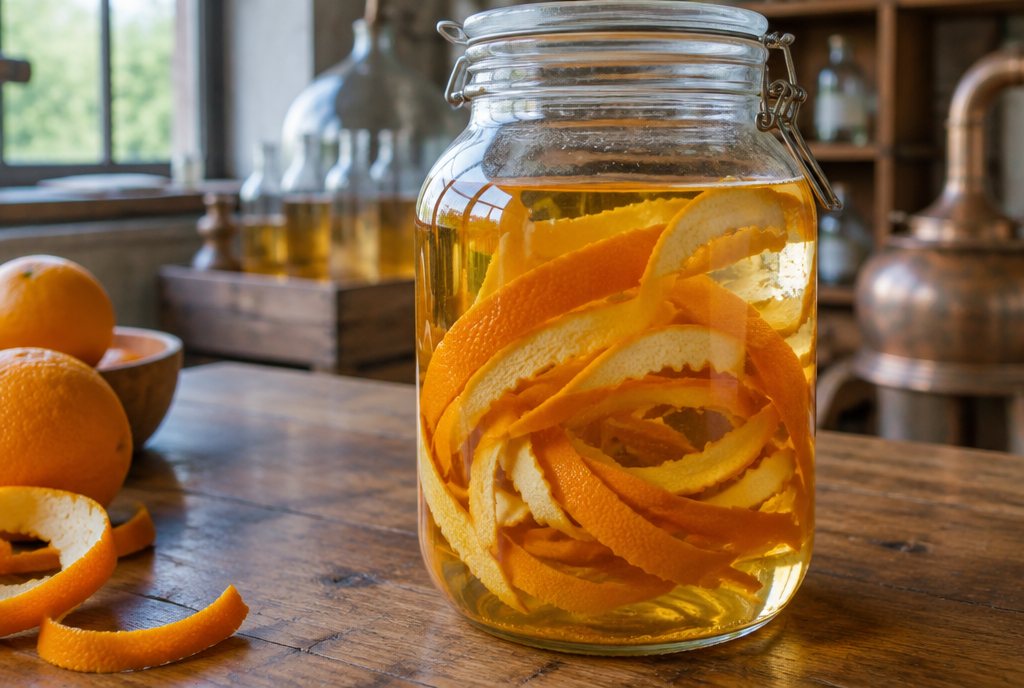
- Strips: the classic format, easy to separate from the macerate at the end of infusion.
- Julienne: a large surface area and quick extraction, suited to short infusions.
- Cubes: easy to dose and handle; their uniform size helps keep extraction regular and repeatable.
What to specify in your quote request
- variety (sweet orange, bitter orange or both) and intended use;
- how much white pith is acceptable;
- cut and dimensions, with tolerance;
- preservation (frozen or SO₂) and packaging;
- annual volumes and call-off schedule;
- information on any post-harvest treatment of the fruit, essential when the peel goes into an infusion.
Exact values are agreed in the data sheet — here is how to read it.
Frequently asked questions
Can SO₂ peel be used for a liqueur?
Yes, but only after thorough desulphiting and with residual sulphites under control. If aroma is the priority, frozen peel avoids this step.
Does all the white pith need to be removed?
It depends on the style. For a fresh liqueur keep it to a minimum; in an amaro a small share may be wanted. The acceptable amount is defined in the data sheet.
Do you also process bitter orange peel?
We process Calabrian bitter orange for pulps and preparations; for peel, tell us your volumes and cut and we will let you know what we can offer.
Need this ingredient for your production?
Tell us product, cut, preservation method and volumes: we’ll reply with the technical data sheet and a tailored quote.