






Pink grapefruit is one of the favourite citrus fruits of contemporary mixology: elegant bitterness, lively acidity and a colour you can see in the glass. The same qualities make it a sought-after sorbet in gelato shops that work with grown-up, less sweet flavours. Using pink grapefruit for cocktails and sorbets all year round, however, means solving a practical problem: getting consistent fruit out of season too, without squeezing crates of citrus behind the bar.
A flavour profile that needs balance
Grapefruit is more acidic and more bitter than orange, and its unmistakable aroma is partly due to nootkatone, a compound found mainly in the peel. In a drink or a sorbet this means two things: sugar should be dosed to balance the bitterness, not to mask it, and the amount of membrane and albedo that ends up in the preparation must be controlled, because they are the most bitter parts of the fruit. Variability matters too: sweetness and bitterness change with ripeness, so taste every batch and adjust the recipe.
Pink grapefruit for cocktails: uses behind the bar
- Juice from thawed quarters: for grapefruit classics such as the Paloma, Greyhound and Salty Dog, and for highballs with tonic or soda.
- Frozen drinks: quarters blended straight from the freezer with the other ingredients chill the drink and add body without watering it down with ice.
- Cordials, syrups and shrubs: prep-room preparations that concentrate the flavour and keep it consistent during service.
- Garnish: many bars use dried citrus wheels, which keep for a long time (see our guide to dried citrus slices); for a zest to express over the drink you need fresh peel.
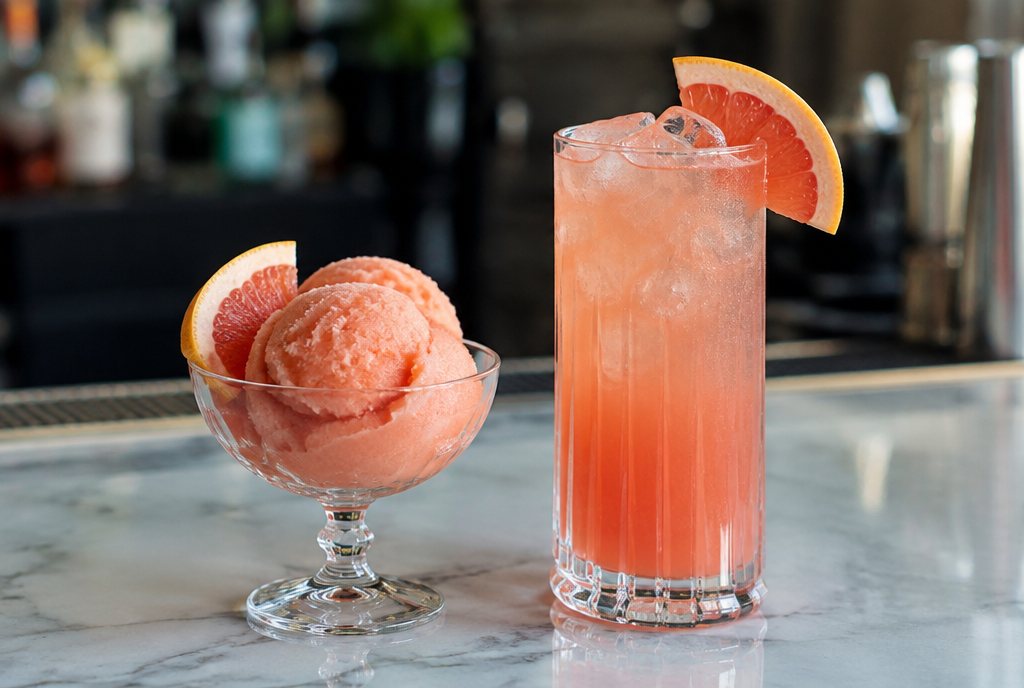
Pink grapefruit sorbet
In sorbet, grapefruit works on its own or paired with raspberry, strawberry, ginger, mint, basil or a sparkling wine base. The critical point is balance: a sour, bitter fruit needs sugars dosed both for taste and for the freezing point of the mix, which determines scoopability in the display cabinet. The base is made from thawed quarters, extracting juice and pulp and straining out the fibrous parts for a smooth texture. The logic is the same as for lemon sorbets, explained in our article on lemon pulp for sorbets and granitas; for handling frozen fruit in the lab, see our guide to frozen fruit for gelato makers.
Why start from frozen
Our pink grapefruit quarters frozen at −18 °C let you work with the same raw material all year, including summer when bars and gelato shops are busiest, taking out only what you need. The characteristics of the quarter (peel, seeds, size) are stated in the data sheet: assess them against your use, because peel increases bitterness in blended drinks. For bars and gelato shops, frozen is the natural format; pink grapefruit in SO₂ must be desulphited before use and is aimed mainly at industry, for example for candying. Segments and other cuts can be assessed on request.
Frequently asked questions
Is juice from frozen quarters suitable for mixing?
Yes, provided the fruit was frozen ripe and is thawed in the fridge. Prepare only the juice you need for the day’s service and adjust the sugar by tasting each batch.
How do you avoid an overly bitter sorbet?
By limiting membrane and albedo in the base, straining the pulp and calibrating the sugars. Pairing it with sweet fruit such as strawberry or raspberry also softens the bitterness.
Can SO₂ pink grapefruit be used in drinks?
That is not what it is for: it needs desulphiting and sulphite labelling (Regulation (EU) No 1169/2011, above 10 mg/kg or 10 mg/l expressed as SO₂). For bars and gelato shops we recommend frozen.
Need this ingredient for your production?
Tell us product, cut, preservation method and volumes: we’ll reply with the technical data sheet and a tailored quote.


