



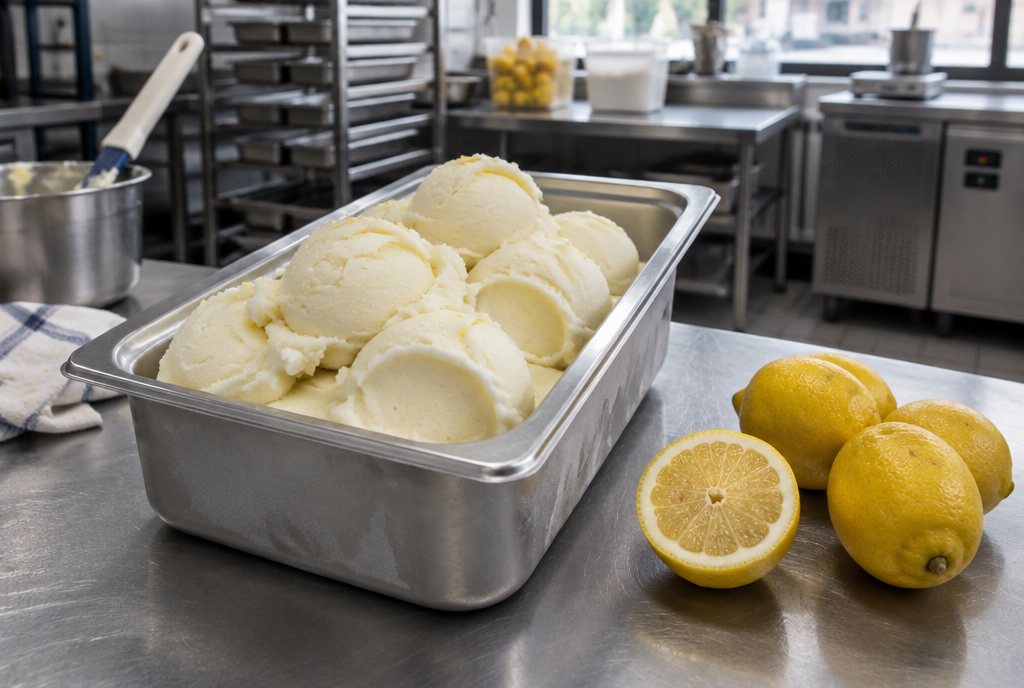
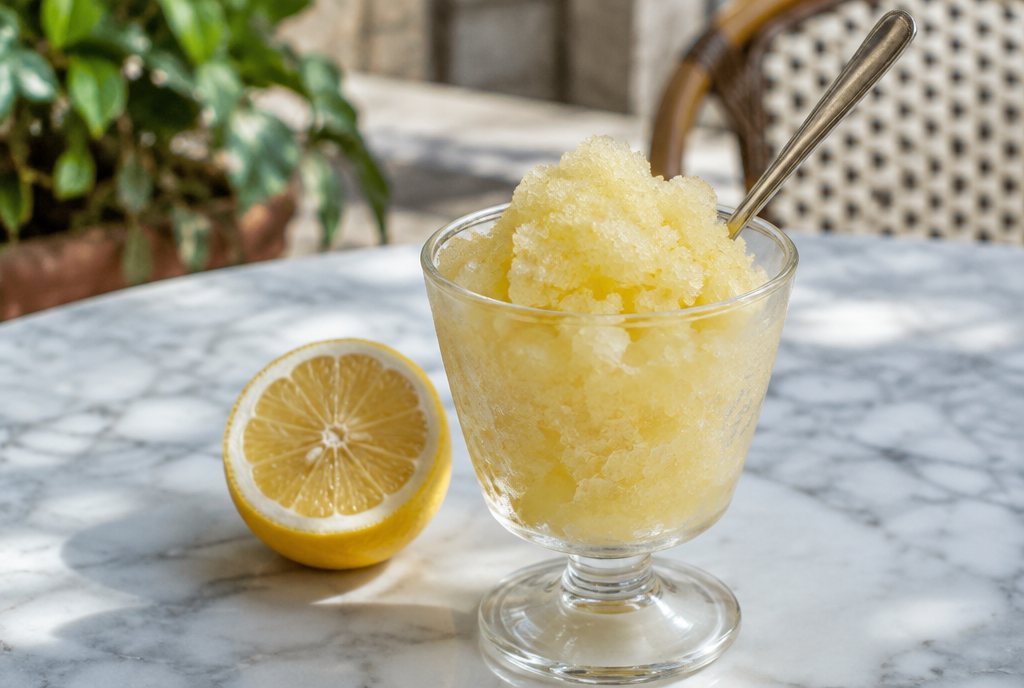
Lemon sorbet and Sicilian-style granita have very few ingredients, so there is nowhere to hide: everything rests on the fresh aroma and sharp acidity of the lemon. For gelaterias, ice-cream manufacturers and bars serving granita, frozen lemon pulp for sorbet is the most practical way to get the same result in January as in August — without squeezing lemons every morning.
Why squeezing fresh lemons is not enough
Fresh lemons change through the year: acidity, juice yield and aromatic intensity vary from one harvest to the next. Squeezing daily means re-adjusting the recipe and managing waste, labour and the hygiene of the juicing station. On top of that, demand for sorbet and granita peaks in summer, while most of the lemon harvest falls between autumn and winter.
Frozen lemon pulp at −18 °C solves this: the fruit is processed in season, frozen and stored until needed. Each lot comes with its own data sheet, so the lab starts from known values rather than an estimate.
Pulp or juice: what frozen lemon pulp for sorbet changes
Filtered juice brings acidity and aroma, but little else. Pulp also contains the fruit’s juice vesicles and some natural fibre, which give the mix body and a fuller mouthfeel. In sorbet this means a more compact, less watery texture; in granita, a rounder taste that recalls the whole fruit rather than a squeezed juice. How fine the pulp should be, and how much fibrous material it may contain, is agreed in the data sheet according to the end product.
Sugar and acidity: the balance belongs in the recipe
Lemon is among the most acidic citrus fruits: without enough sugar a sorbet tastes harsh. And sugars do more than sweeten — the blend of sucrose, dextrose or other sugars also sets softness and scoopability at display temperature. The dosage depends on recipe, serving temperature and machine: to set it from the Brix and acidity of each lot, see our guide to Brix and acidity of Calabrian citrus.
Thawing and handling
- Thaw in the refrigerator in the closed pack, never at room temperature.
- Stir before use: once thawed, the liquid may separate from the fibre.
- Add the pulp cold: many labs prepare and chill the sugar syrup first and only then add the lemon, so as not to “cook” its fresh aroma.
- Do not refreeze thawed pulp; use it within the time stated in the data sheet.
Pairing ideas for the display case and the bar
- Lemon and basil or lemon and mint: herbs infused cold in the syrup for a green, fresh profile.
- Lemon and almond: the two classic Sicilian granita flavours, also good served together in the same glass.
- Lemon and ginger for a sharper version, also as a pre-dessert or a base for drinks.
For visible fruit pieces in the tray, see frozen diced orange for ice cream; for an overview, read our article on frozen fruit for gelato.
What to include in your request
End use (sorbet, granita, drinks), pulp texture, pack format matched to daily use, seasonal and annual volumes. The pulp is made from Calabrian lemons processed in San Ferdinando.
Frequently asked questions
Can the pulp be used straight from frozen?
For sorbet and granita it is best thawed and stirred so it can be dosed accurately; in industrial plants the method is defined according to the line.
Does the same pulp work for sorbet and granita?
Yes: the process changes more than the ingredient. Sorbet is churned and has fine crystals, granita more perceptible ones; the recipe is adjusted accordingly.
Can it be used outside the gelateria?
Yes, for example in lemonades and cold drinks. For creams and fillings the balance changes: ask us for the data sheet for your application.
Need this ingredient for your production?
Tell us product, cut, preservation method and volumes: we’ll reply with the technical data sheet and a tailored quote.