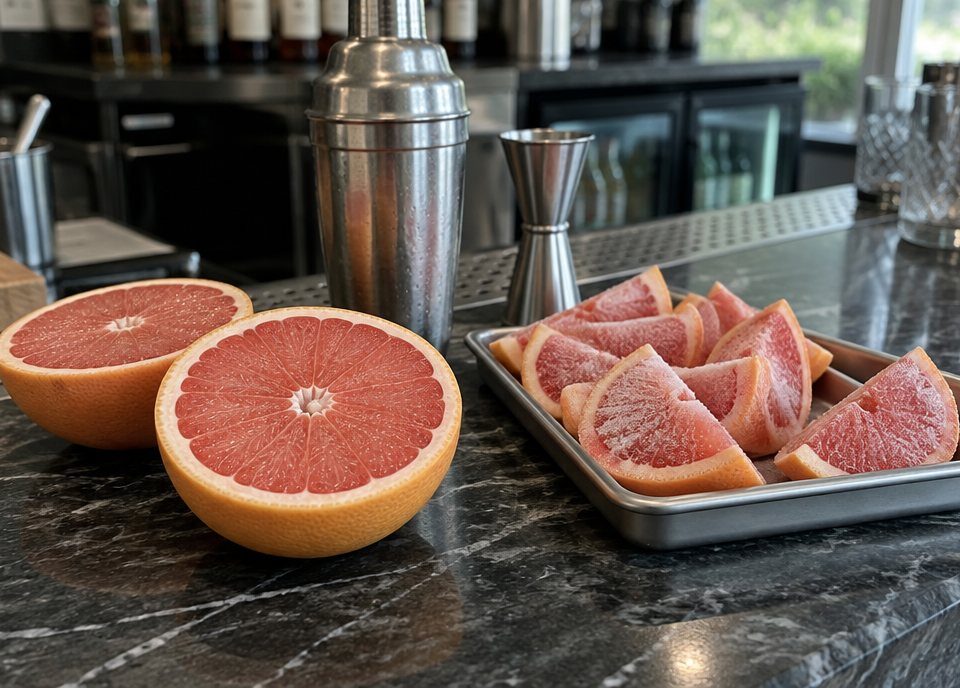





In mixed salads and poke bowls, pink grapefruit brings three things few fruits offer together: colour, juiciness and a slightly bitter note that cleanses the palate. In a central production kitchen, though, segmenting it by hand is one of the slowest jobs with the most waste. Here is how to use pink grapefruit segments in food service, which format to buy and what to ask your supplier.
Why pink grapefruit works in cold dishes
The colour of the flesh comes mainly from lycopene, the same pigment found in tomatoes, and it stays bright next to vegetables and raw fish. The taste combines sweet, sour and bitter; much of the bitterness comes from naringin, concentrated in the membranes and albedo. That is why grapefruit pairs well with rich or savoury ingredients that soften its bitter edge:
- salads: fennel, avocado, rocket, olives, nuts;
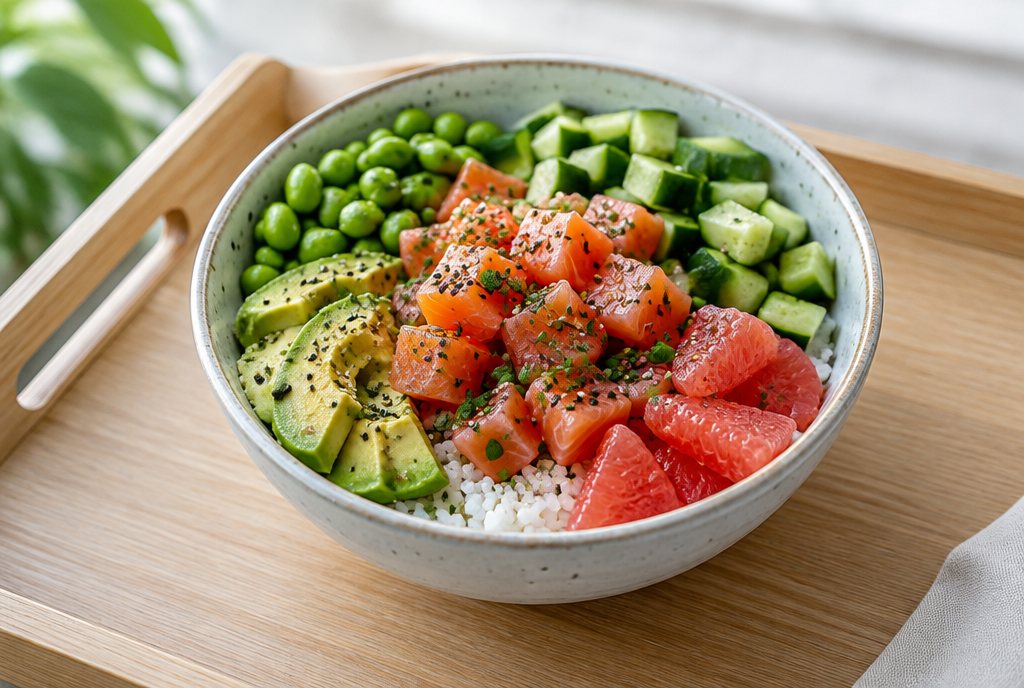
- poke bowls: salmon or tuna, edamame, cucumber, sesame, with a dressing of grapefruit juice and soy sauce;
- fish and shellfish: prawns, carpaccio, seafood salads;
- breakfasts and buffets: fruit cups with yogurt and cereals.
Pink grapefruit segments: with membrane or supremes
In the kitchen, “segment” can mean two different products: the segment with its membrane, as it comes apart when the fruit is peeled, and the supreme, the flesh alone cut out between the membranes. Supremes look smarter and taste less bitter, but they are more fragile and labour-intensive to cut by hand. Our pink grapefruit is produced in quarters, frozen at −18 °C or in SO₂; segments and other cuts can be assessed on request, depending on volumes and specification. For high-volume salads, quarters already make the job easier: the fruit arrives portioned and the kitchen only has to cut it to the size the dish needs. To find your way around formats, see our guide to frozen fruit cuts.
Healthcare catering: one extra precaution
Grapefruit contains furanocoumarins, substances that can interfere with the metabolism of a number of medicines and alter their effect. In hospital kitchens, care homes and meal services for older people, agree with the dietetic service whether and when to put it on the menu, and flag it clearly in the dish description, even when it is just one salad ingredient.
Frozen or in SO₂ in the kitchen
For direct service, frozen is the right choice: preservation relies on cold alone. The SO₂ product is an industrial semi-processed ingredient: it must be desulphited before use and, if residual sulphites exceed 10 mg/kg expressed as SO₂, they must be declared as allergens (Regulation (EU) No 1169/2011). It is not meant for salads and bowls. After thawing, the flesh is softer than fresh and releases juice: drain it, keep the liquid for sauces and dressings, and add the fruit to the dish at the last moment. For thawing, HACCP and portioning, the guidance we give for orange segments in contract catering applies.
What to specify in your request for quotation
State the use (salads, bowls, buffets, desserts), the format (quarters, or segments on request, with or without membrane), the tolerance for seeds and albedo residues, volumes by period and the documents your tender requires, such as data sheet and batch traceability. For how to read these data, see our guide to technical specifications of semi-processed fruit.
Frequently asked questions
Is pink grapefruit less bitter than white grapefruit?
Pink-fleshed varieties are generally perceived as sweeter, but bitterness also depends on ripeness and peeling: the more membrane and albedo are left, the bolder the taste.
Can it go into bowls prepared in advance?
Grapefruit releases juice and acidity, which soften the other ingredients. In pre-packed bowls, keep it in a separate compartment or add it shortly before service, and validate how it holds up with in-house trials.
Do you offer other citrus fruit ready for salads and buffets?
Yes: we also process oranges, for example, into segments frozen at −18 °C. Tell us about your menu and we will point you to the available formats.
Need this ingredient for your production?
Tell us product, cut, preservation method and volumes: we’ll reply with the technical data sheet and a tailored quote.