


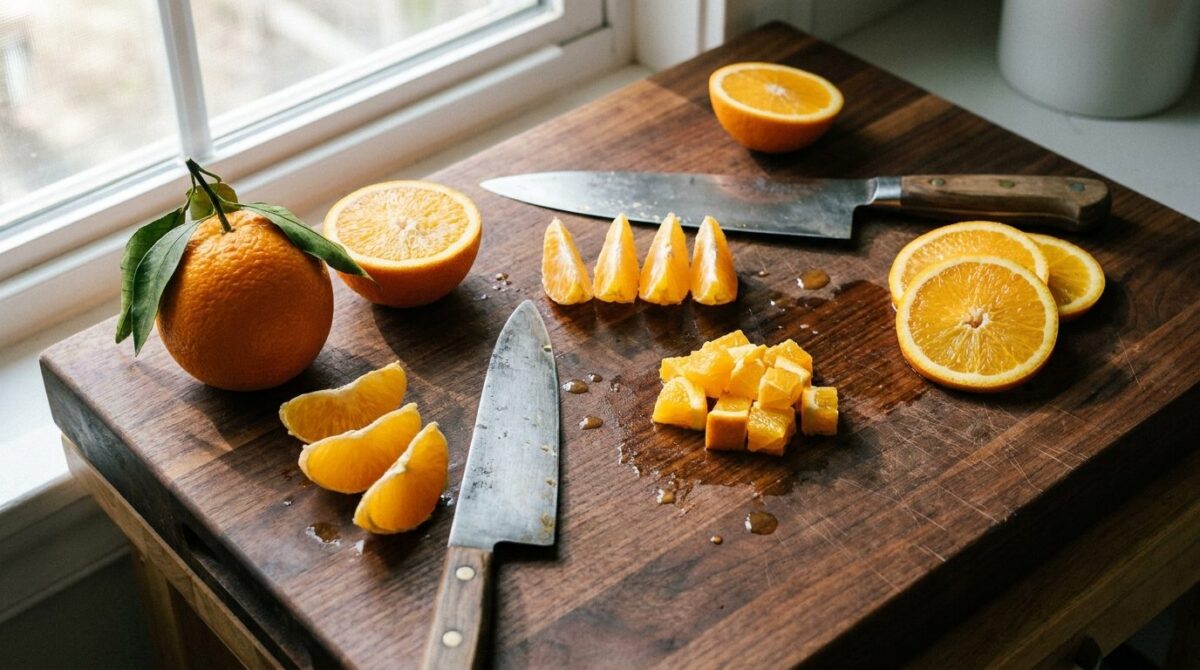
Cutting frozen fruit is not an aesthetic preference: it changes the yield, the processing time, the distribution of the fruit in the final product, and in some cases even the shelf-life. Let’s see how to choose the right format based on the application.
Whole
Frozen whole fruit is the format that best preserves the volatile aromas. It is the natural choice for:
- Fruit in syrup for high-end pastry making: cherries, strawberries, whole raspberries.
- Decorating cakes and bavarois: recognizable shape, preserved chewiness.
- Premium and compote preserves, where the consumer wants to “see” the fruit.
The disadvantage: space in the carton, higher cost per kilo compared to cuts, longer thawing time (3-4 hours at +4°C for strawberries, 2 hours for small fruits).
Halves and wedges
Cutting in half is preferred for apricots, peaches and figs intended for industrial pastry making: it is distributed evenly in a tart or brioche opening, and cooks in predictable times. Wedges (segments) are the typical format for oranges and clementines intended for premium yogurt, frozen fruit salads, mousses.
Typical Brix maintained: unchanged compared to the whole fruit, but the greater exposed surface accelerates degradation if the cold chain is interrupted.
Cubes (dices)
Cubes are by far the format most requested by the industry. They are distinguished by size:
- Macrocubes 10×10×10 mm: pastries, ice creams with visible pieces, filled with brioche.
- Standard cubes 6×6×6 mm: yogurt, mueslix, cereals for breakfast, snacks.
- Microcubes 3×3×3 mm: baby food, fine jams, sauces, condiments.
Theredimensional toleranceit is the parameter that distinguishes an industrial cube from an artisanal one. A tolerance of ±2 mm is acceptable; furthermore, the product is heterogeneous and creates dosing problems.
Pulp (purees)
The pulp is crushed fruit, filtered or not, with the fibers preserved. It differs from puree (finer and homogenized). Typical uses:
- Juices and nectars: filtered pulp with a size of less than 0.5 mm.
- Fruit yogurt: pulp with fibers, caliber 1-3 mm.
- Industrial artisanal ice cream: pulp with minimal crystallization.
- Cosmetics and nutraceuticals: freeze-dried or concentrated puree.
Washers (slices)
Lemon, orange and mandarin slices (both frozen and dried) have a typical thickness between 3 and 6 mm. They are used in:
- Premium beverage and industrial mixology.
- Dried decorations for pastry and chocolate making.
- Herbal teas and infusions.
Scrap (broken)
The scrap (fig pieces, broken berries) cost 20-40% less than the whole product. They are perfect when the shape doesn’t matter: filled with biscuits, jams, ice creams, sauces. Same organoleptic quality, lower price.
How to decide
Three questions to ask yourself:
- Will the end consumer see the piece intact? If yes, whole or half.
- How much defrosting time can I afford? If
- Do I have a mechanical dispenser for precise size? If so, close tolerance calibrated cubes.
Discover all the cuts availablein our catalogue, with dimensional specifications and tolerances for each format.


