



Limoncello has a simple recipe and a demanding raw material. It is made by infusing lemon zest alone in alcohol, then adding a syrup of water and sugar: no juice, no pulp. For a liqueur producer, choosing lemons for limoncello production therefore means choosing a peel: its aroma, colour and condition go straight into the bottle.
What you really need: the flavedo, not the albedo
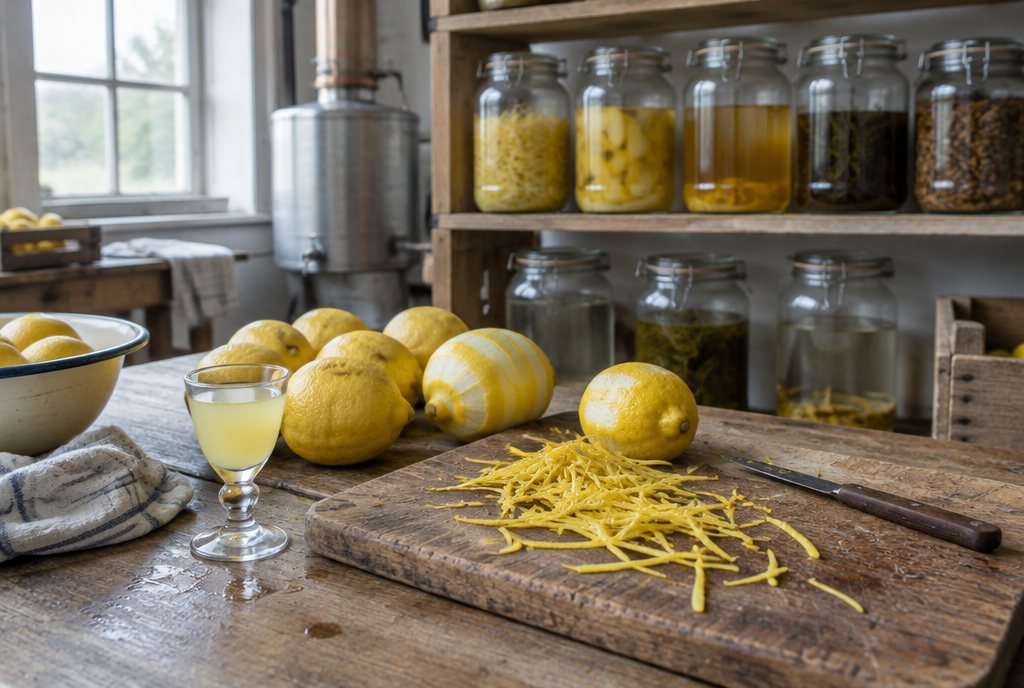
Lemon peel has two layers. The flavedo, the yellow outer layer, holds the essential-oil glands: that is where the aroma the alcohol must extract is found. The albedo, the white layer underneath, is poor in aroma and rich in bitter compounds: if it ends up in the infusion, the liqueur turns bitter and less clean. Peeling must therefore remove the yellow and leave the white on the fruit, at an even thickness.
How to recognise good lemons for limoncello production
- Thick, aromatic peel: rich in essential oils, with clearly visible, turgid oil glands. It is easier to peel and lets you separate the flavedo precisely.
- Colour and ripeness: peel colour changes as the fruit ripens and is reflected in the colour and aroma of the liqueur. Agree the degree of colour with your supplier.
- Freshness: essential oils are volatile. The less time between harvest and processing, the more aroma reaches the infusion.
- Soundness: no bruises, mould, blemishes or damaged oil glands, which can bring off-notes.

Post-harvest treatments: always ask
Many citrus fruits for the fresh market receive post-harvest treatments, such as waxes or anti-mould products, which must be indicated. When the peel is the main ingredient, this has to be clarified before ordering: ask your supplier whether any treatments have been applied and which ones, and have this stated in the batch documentation and the data sheet (see our guide on how to read the specifications of semi-processed fruit).
Fresh or frozen zest?
Fresh lemons tie production to the harvest months and to the labour available for peeling. Zest frozen at −18 °C, already peeled and cut, lets you produce all year with a consistent raw material, stocked in the peak season. Two precautions: agree the cut and allowed albedo, and validate your infusion protocol in-house, because frozen zest may have different extraction times.
Zest cut and extraction
Thin, even strips are the most common cut: good contact surface, easy separation from the liquid, simpler filtration. Grated zest extracts faster but brings fine particles and, if the grater reaches the white, more bitterness. Either way, consistency counts: even thickness means predictable extraction, batch after batch. The same applies to orange liqueurs: for thin cuts, see orange peel julienne.
Calabrian lemons and seasonality
Italy has a long tradition of lemons tied to their territory, with protected geographical indications such as Limone di Sorrento PGI and Limone Costa d’Amalfi PGI. Calabria is lemon country too. The most widespread variety in Italy is Femminello, a remontant lemon that can give several harvests over the year: for availability periods see our Calabrian citrus calendar. On origin, read our comparison of Calabrian and imported lemons. Our lemons are processed in San Ferdinando, a few kilometres from the groves.
Frequently asked questions
Why not use the whole lemon?
Because albedo and pulp add bitterness and cloudiness. Traditional limoncello is made from the yellow zest only.
Is peel in SO₂ suitable for limoncello?
SO₂ preservation is designed for candying and requires desulphiting. Alcoholic infusions normally use fresh or frozen zest; for special requirements, discuss it with your food technologist.
Do you supply ready-cut lemon peel?
Yes, we also process lemons into peel cuts, frozen at −18 °C or in SO₂. Cut, thickness and allowed albedo are defined in the data sheet according to your process.
Need this ingredient for your production?
Tell us product, cut, preservation method and volumes: we’ll reply with the technical data sheet and a tailored quote.