



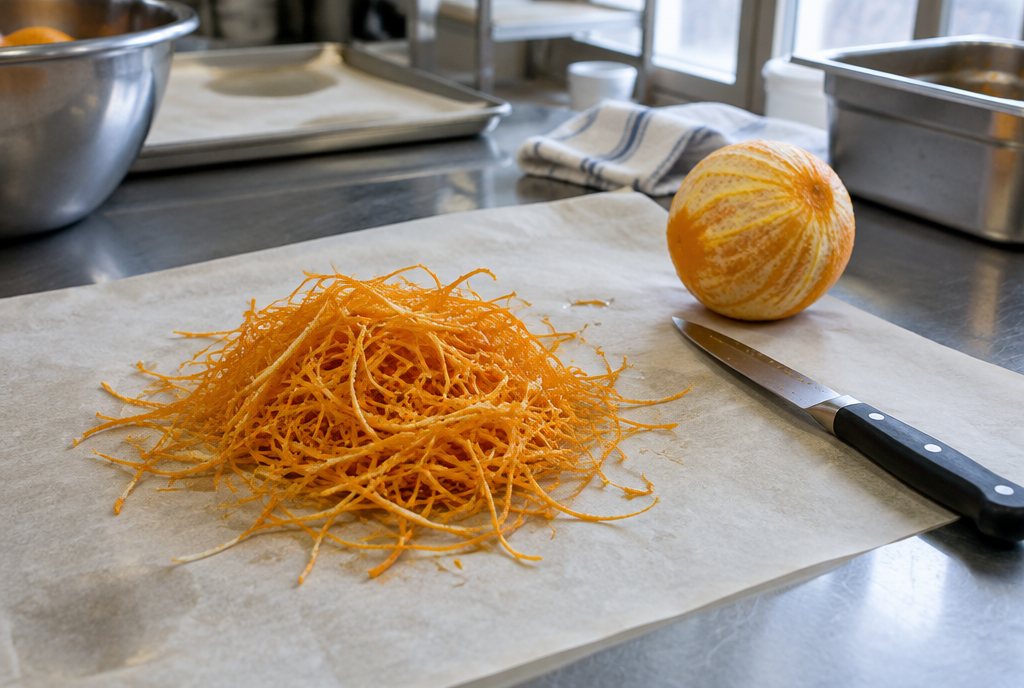
Italian pastry chefs call it capelli d’angelo — “angel hair”: orange peel cut into an extremely fine julienne, long, thin and regular strands that become glossy, soft and highly fragrant once candied. It is the cut chosen when orange must be seen, not just tasted: on a tart, on a mousse, inside a praline.
How it is made
We start from Calabrian Navel oranges selected for their thick peel, rich in essential oils. The zest is separated and cut into fine strands, keeping a controlled amount of albedo, the white layer: too little and the strand breaks, too much and it becomes bitter and chewy. It is a delicate cut that requires consistency: strands of even width candy uniformly and do not stick together.
In SO₂ or frozen?
- In SO₂: ideal for those who candy. The strands remain stable for months in drums and are desulphited and candied when needed, giving a translucent, shiny result.
- Frozen at −18 °C: for those who use fresh peel, for example to flavour creams, infusions or ice-cream bases. No additives, full peel aroma.
Where it is used
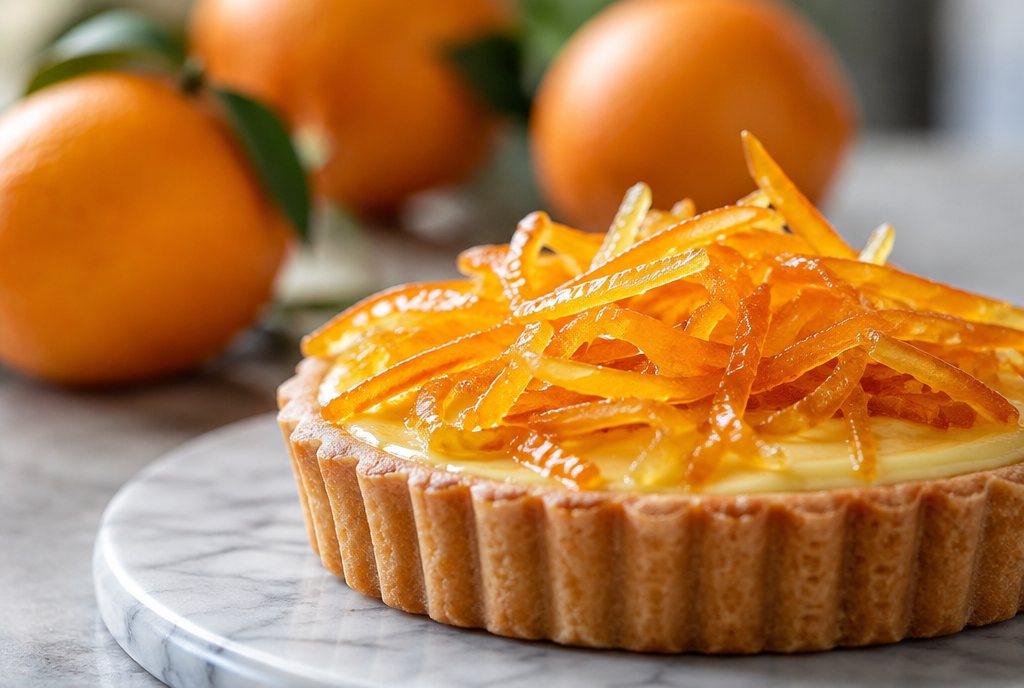
- Tarts: a tuft of candied julienne on the edge or in the centre is the signature decoration of citrus pastry.
- Chocolate: in pralines, on bars, in mendiants.
- Ice cream and semifreddo: as garnish or as a soft-chewy ripple.
- Leavened cakes: on top of colomba and baked goods.
- Mixology: candied and dried, as garnish for citrus cocktails.
Quality points to check
When assessing a supplier, ask for the technical data sheet and check:
- width and length of the strands and how consistent they are;
- albedo content: present, but not excessive;
- colour and absence of dark or stained parts;
- integrity: how many broken strands are in the drum or carton.
To read these parameters in supplier documents, see our guide on how to read the specifications of semi-processed fruit.
Frequently asked questions
What is the difference between julienne and strips?
Both are strip cuts, but strips (“filetti”) are wider and thicker, ideal for orangettes; angel-hair julienne is extremely fine, designed to decorate and flavour.
Can it be candied in-house?
Yes, starting from julienne in SO₂: after desulphiting it is candied in syrups of increasing concentration. Being thin, it needs shorter times than cubes.
Do you also make lemon julienne?
Yes, from Calabrian lemons too. Contact us for availability and formats.
Need this ingredient for your production?
Tell us product, cut, preservation method and volumes: we’ll reply with the technical data sheet and a tailored quote.