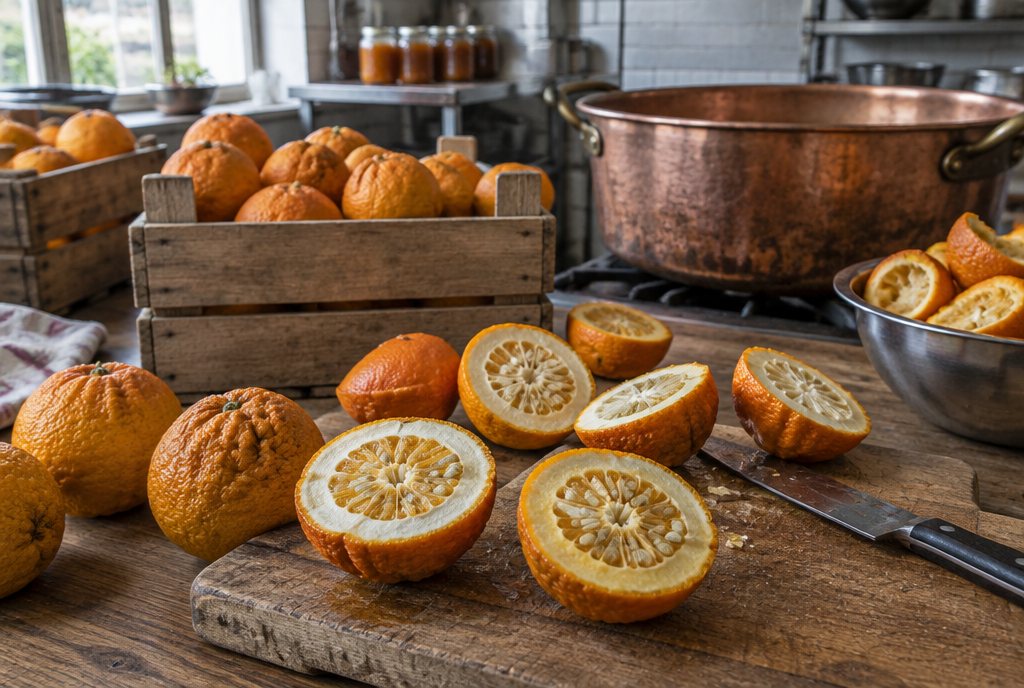





In a panettone, candied orange peel is not a detail: it is one of the ingredients customers recognise at the first bite. Aroma, softness and colour depend on the quality of the original peel and on how it was preserved. For producers of festive cakes, choosing the right orange peel — and ordering it in time — makes the difference between an anonymous product and one that sells itself.
What Italian law says about candied fruit in festive cakes
In Italy, the decree of 22 July 2005 on bakery confectionery sets ingredients and minimum quantities. To be called panettone, the product must contain raisins and candied citrus peel amounting to at least 20%; colomba also requires a minimum share of candied citrus peel. Orange peel is therefore not optional — it is part of the very definition of the product, a point worth knowing if you sell “authentic Italian” panettone abroad.
Why start from peel in SO₂
Citrus is harvested in winter and spring, but panettone is produced from late summer and colomba early in the year. Peel preserved in SO₂ bridges the gap: it is processed when the fruit is at its best and stays stable for months, ready to be desulphited and candied when your production calendar requires it. See also our article on Calabrian citrus seasonality and purchase planning.

Which cut to choose
- Small cubes: spread evenly through the dough without weighing down the rise. The most common cut in classic panettone.
- Medium and large cubes: a fuller bite and visible when sliced; ideal for premium lines.
- Strips and fine julienne: for decorating colomba, on the glaze or under the almonds.
Exact size and tolerance are agreed in the technical data sheet, based on your dough and production line.
What affects yield
- Peel thickness: Calabrian Navel oranges have a thick peel and compact albedo that keeps its shape when candied.
- Cut regularity: even pieces absorb syrup at the same rate and candy in predictable times.
- Piece integrity: fewer breakages in the drum mean less waste during desulphiting.
Timing: when to order
For the Christmas season, define quantities and cuts by the previous spring or summer, so the peel is ready for candying before production starts. For colomba the logic is the same, shifted by a few months. With a supplier that preserves in SO₂ you can also schedule staggered pick-ups during the year.
Frequently asked questions
Should I buy peel in SO₂ or already candied?
It depends on your process. With an in-house candying department, peel in SO₂ gives you control over sugar, softness and aroma and a lower raw-material cost. Otherwise, work with a candied-fruit maker that starts from quality peel.
Does orange peel in SO₂ have to be declared on the label?
After desulphiting and candying, if residual sulphites in the finished product exceed 10 mg/kg they must be declared as an allergen under EU labelling rules.
Do you also process lemon and mandarin?
Yes: lemon and mandarin peel often complete the candied mix in festive cakes. Contact us for available cuts.
Need this ingredient for your production?
Tell us product, cut, preservation method and volumes: we’ll reply with the technical data sheet and a tailored quote.