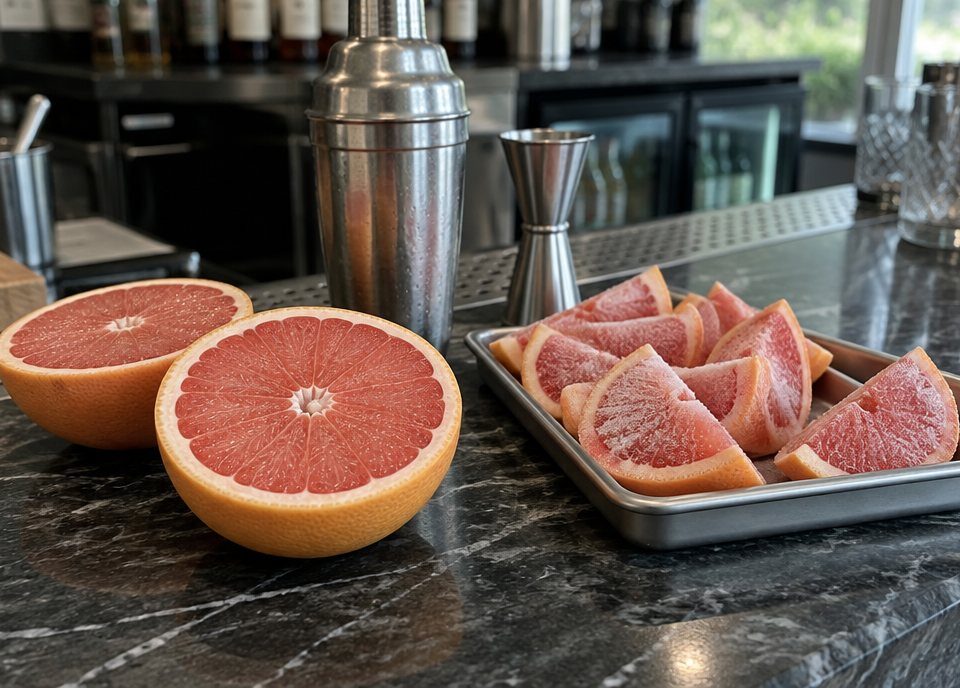




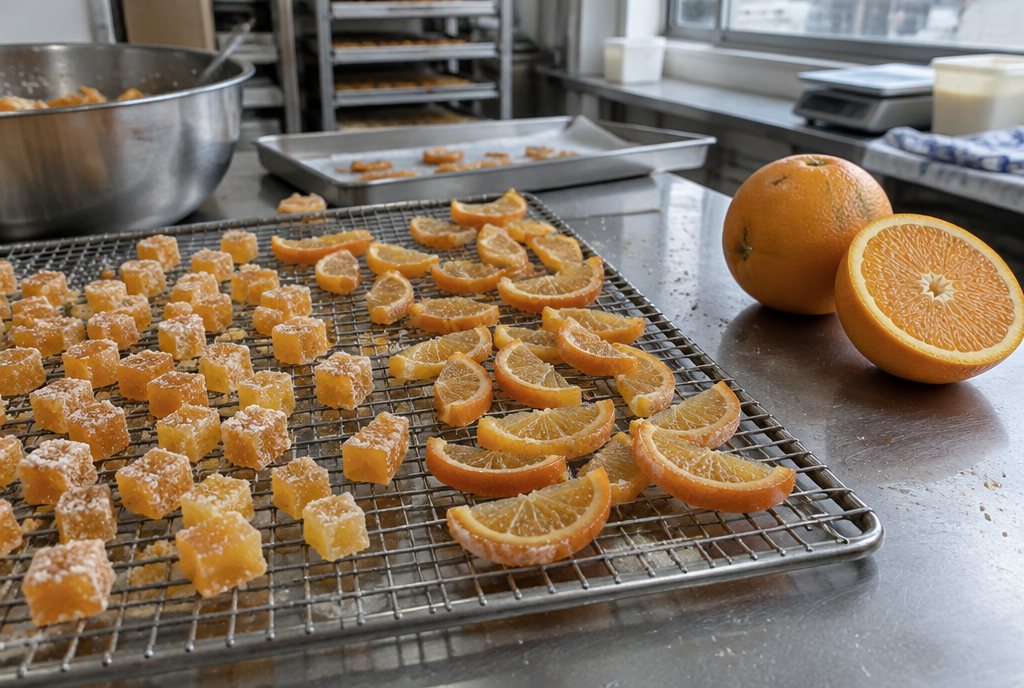
Sooner or later every candied fruit maker or industrial bakery faces the question: should you candy from fresh oranges or buy a ready-cut semi-processed product? In candied orange production there is no one-size-fits-all answer: it depends on volumes, staff, space and calendar. Here is how the process works and which cost and time factors to compare using your own line data.
How industrial candied orange production works
Whatever the recipe, the stages are always the same:
- Preparation: sorting, washing and cutting the fruit or peel into cubes, strips, slices or segments.
- Blanching or desulphiting: fresh fruit is usually blanched to soften the peel and temper its bitterness; fruit in SO₂ must be desulphited by washing and boiling.
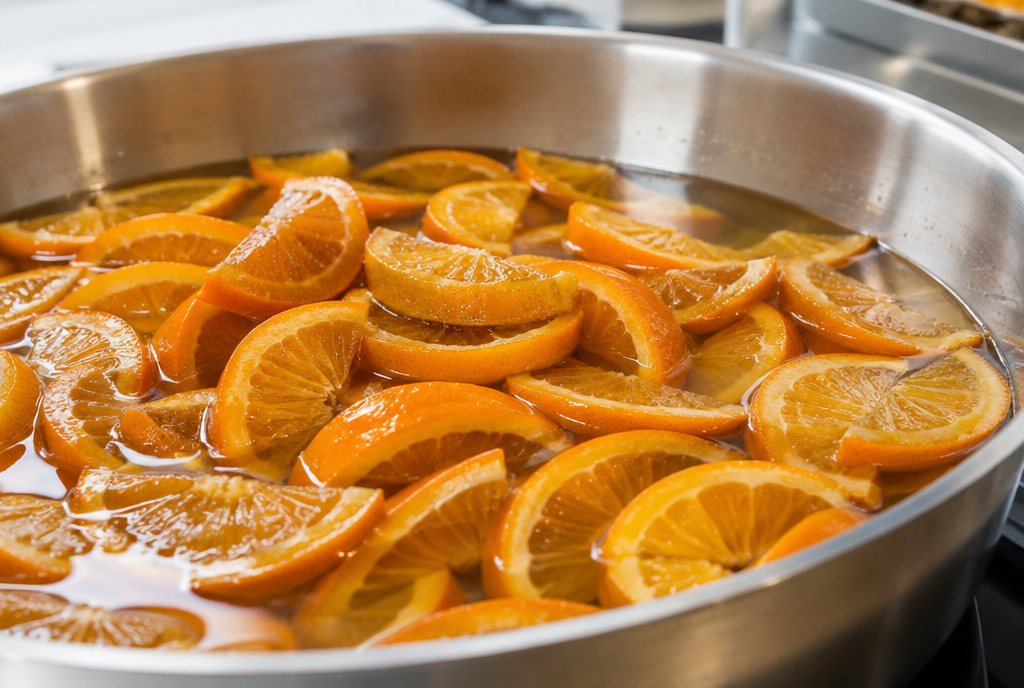
- Candying: the pieces go through sugar syrups of increasing concentration, in successive steps. Sugar gradually replaces the water in the fruit; rush it and the piece shrivels and hardens on the surface.
- Finishing: draining, drying and, if required, glazing.
The candying itself is the same in both cases: what changes is everything that comes before it.
Starting from fresh fruit
Candying from fresh oranges gives full control over variety and ripeness, but comes with some constraints:
- Seasonality: Navel oranges are harvested from late autumn into spring (see our Calabrian citrus calendar), so all preparation is concentrated in a few months.
- Labour and equipment: receiving, washing, peeling and cutting require dedicated staff and machines.
- Waste: if you only candy the peel, pulp, seeds and unsuitable fruit must be disposed of or put to other use.
- Variability: fruit size and peel thickness change over the season, and so does the regularity of the pieces.
Starting from ready-cut semi-processed fruit
With a semi-processed product, made for example from Calabrian Navel oranges, the cutting is already done and you only buy the part you need. There are two options:
- In SO₂: stored in drums at ambient temperature and candied as orders come in. It requires desulphiting, with the related water and energy use, and control of residual sulphites: above 10 mg/kg in the finished product they must be declared on the label as an allergen. It is the classic base for many candied fruit makers, as with orange cubes in SO₂ or orange slices in SO₂.
- Frozen at −18 °C: no desulphiting, but it needs freezer storage and careful thawing management.
Costs and timing: the factors to compare
The price per kg of fresh fruit and of a semi-processed product cannot be compared directly. It is better to calculate the cost per kg of finished candied fruit in both scenarios, taking into account:
- the share of the fruit that can actually be candied;
- labour hours for preparation and cutting;
- water and energy for blanching, desulphiting or cold storage;
- warehouse space and capital tied up in stock;
- processing waste and off-size pieces.
When each route makes sense
Fresh fruit makes sense for limited volumes concentrated in the season, or for lines that also want to use the pulp and juice. Semi-processed fruit pays off when you produce all year, need to handle peaks such as the festive bakery season (see our article on orange peel for panettone and colomba) or want consistent pieces from batch to batch. Often the most practical answer is a mix: fresh in season, semi-processed for the rest of the year. If you opt for semi-processed, state cut and dimensions, preservation, annual volumes and call-off schedule in your quote request; technical parameters are then set in the data sheet.
Frequently asked questions
Is candied fruit made from SO₂ semi-processed orange different from fresh?
After proper desulphiting, candying follows the same protocol. The real differences come mainly from peel quality and cutting consistency.
Semi-processed in SO₂ or frozen?
SO₂ allows storage at ambient temperature but requires desulphiting; frozen avoids it but needs space at −18 °C. The choice depends on the facilities you already have.
How long does candying take?
It depends on cut, size and method: thin pieces candy faster than large ones. Timing should be defined in your own production protocol.
Need this ingredient for your production?
Tell us product, cut, preservation method and volumes: we’ll reply with the technical data sheet and a tailored quote.