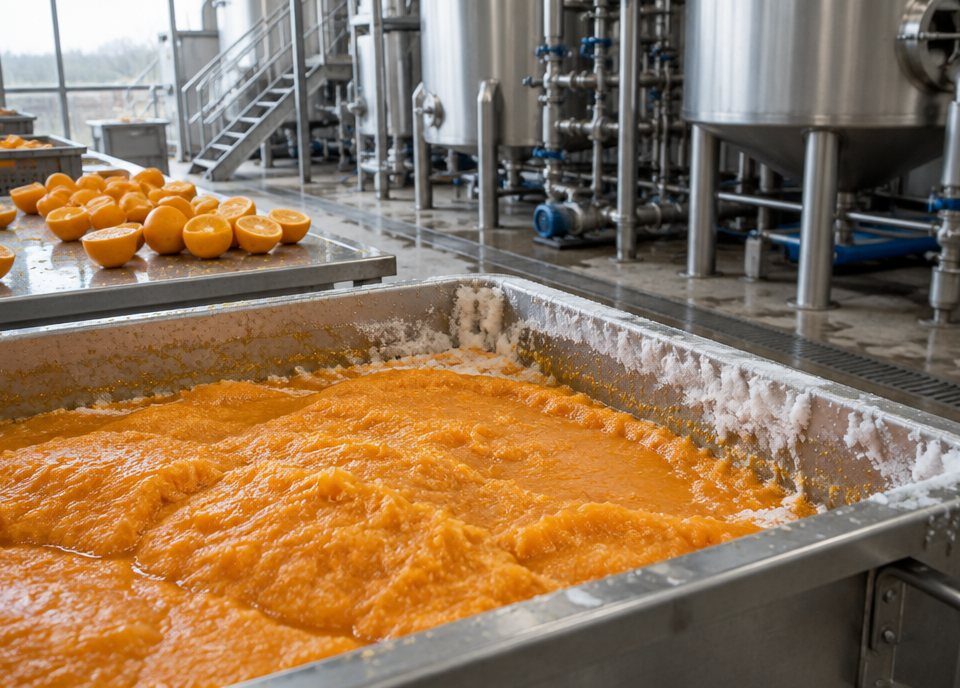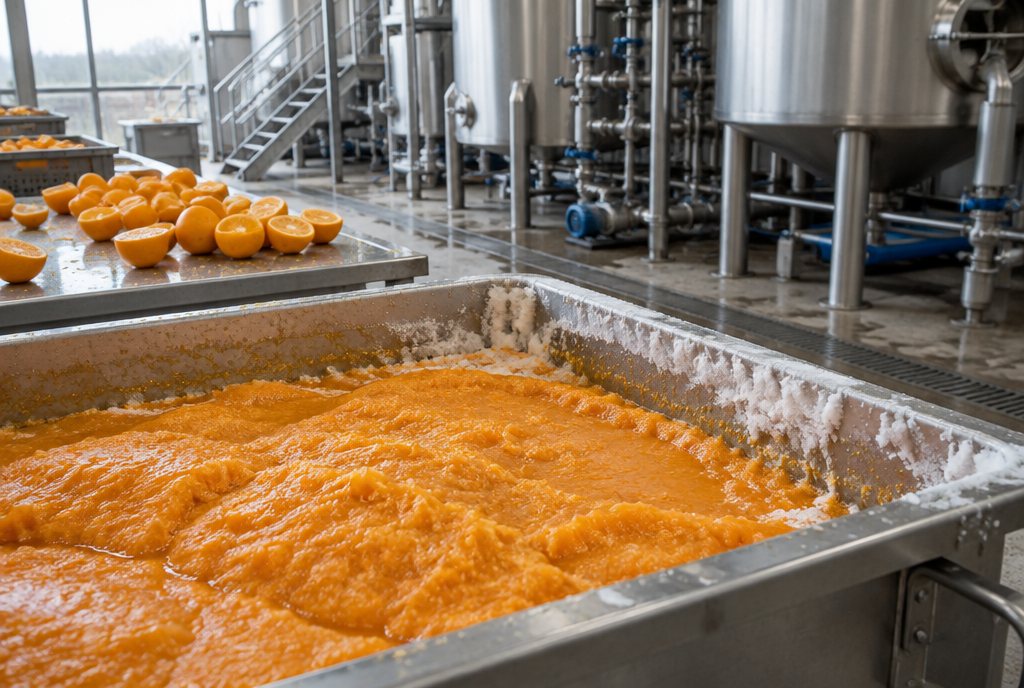




Orange croissants, tarts, tartlets, filled biscuits, loaf cakes with a soft centre: in bakery, orange is a flavour that sells, provided the filling really tastes of fruit and stands up to the production line. Frozen at −18 °C, orange pulp for bakery fillings is the starting point for many bakeries and filling manufacturers: fruit already processed, natural flavour, available all year round.
From pulp to filling
Pulp is not yet a filling: it has to be transformed. It is usually cooked with sugars and, where needed, thickeners or gelling agents such as pectin and starches, up to the desired consistency. Orange helps: it contains fibre and natural pectin, and its acidity supports pectin gelling. Three parameters drive the recipe:
- Dry matter: the higher it is, the more stable the filling and the less water it releases into the dough.
- Consistency: it must run through depositors without flowing out on the tray.
- Sweet-sour balance: dose the sugar for a clean flavour that does not mask the orange aroma.
Filling before or after baking
- Bake-stable fillings: go into the oven with the dough, as in tarts, puff pastries and filled biscuits. They must withstand heat without boiling, leaking or drying out on the surface.
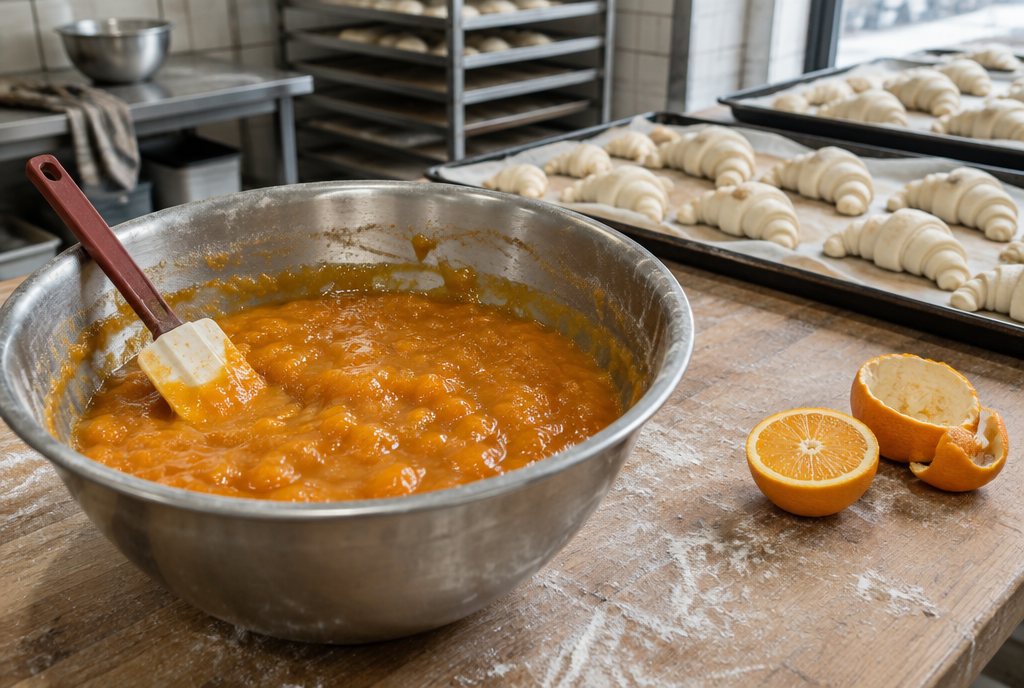
- Post-bake fillings: are injected into the baked product, as in croissants filled after baking. They need a softer, more fluid cream with little free water, so the dough does not turn soggy over time.
The same pulp can serve both lines: the recipe changes, not the raw material.
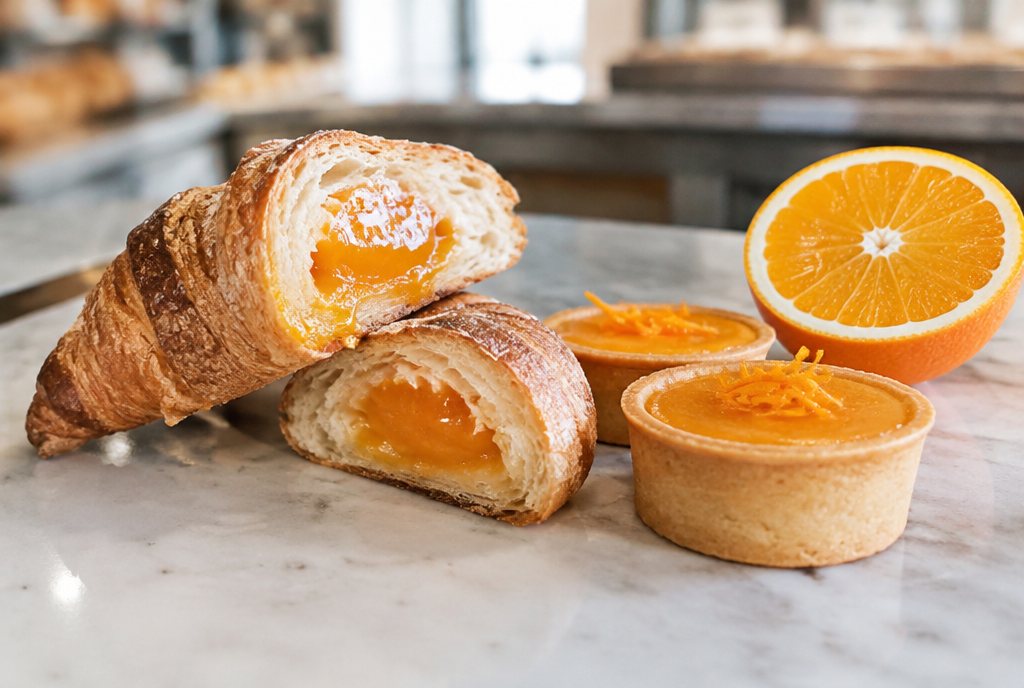
Orange pulp for bakery fillings: flavour and visible pieces
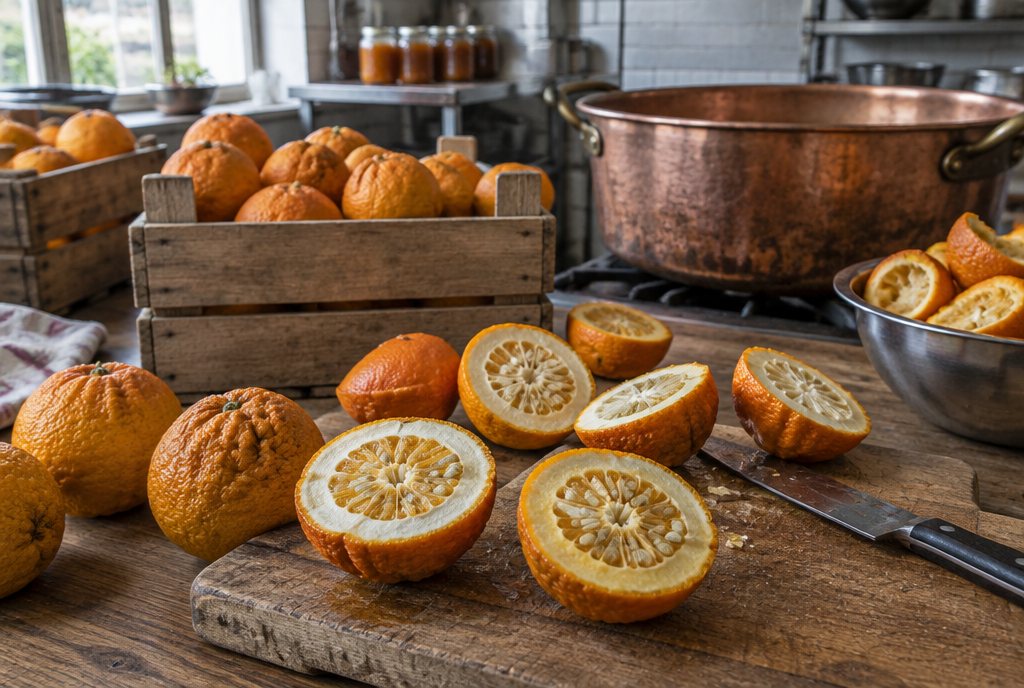
Frozen orange pulp provides the flavour base. For a richer product, you can add pieces that show when cut: candied orange cubes, made from orange cubes in SO₂ for candied fruit, in loaf cakes and tartlets, or orange peel julienne on the surface of tarts and puff pastries. A filling closer to marmalade, with more peel and a bitter note, can also be built with a share of bitter orange pulp: on the differences between the two, see our article on oranges for industrial marmalade.
What to ask for in the data sheet
- Brix and acidity of the pulp, with tolerances;
- consistency and particle size, if the filling runs through depositors or injection nozzles;
- absence of seeds and presence or absence of peel fragments;
- packaging and thawing method compatible with your bakery;
- annual volumes and seasonal peaks, for example for festive lines.
For the technical parameters of frozen pulp, see our dedicated guide to frozen orange pulp for industry.
Frequently asked questions
Can the pulp be used as it is, without cooking?
For a bake-stable filling, usually not: without concentration with sugars and some structure, the pulp releases water into the dough and tends to boil in the oven. It can, however, go into cake and loaf cake batters as an ingredient, adding flavour and moisture.
Sweet or bitter orange for bakery?
Sweet orange gives a fruity, rounded flavour suited to most fillings; bitter orange brings the character of English marmalade. The two can be blended.
How should thawed pulp be handled?
Keep it refrigerated, use it promptly and do not refreeze. Exact times are set by your HACCP plan on the basis of the data sheet.
Need this ingredient for your production?
Tell us product, cut, preservation method and volumes: we’ll reply with the technical data sheet and a tailored quote.