



Mandarin is a winter classic in the gelato display, but also one of the trickiest flavours to build: its aroma is intense and recognisable yet volatile, and its soft orange colour easily fades in the mix. Choosing mandarin for ice cream therefore means choosing a raw material that carries the fruit’s aroma and colour all the way to the tub.
Where mandarin aroma comes from
Much of the mandarin’s fragrance is concentrated in the essential oil of the peel; juice and flesh bring sweetness, acidity and the rest of the aroma. Compared with orange, the profile is sweeter and more floral, and it comes through even in a simple sorbet. Aroma compounds, however, are volatile and suffer from heat, oxygen and time: long cooking and standing at room temperature flatten them. That is why it pays to start from mandarin processed and frozen in peak season. On essential oils, see also our article on mandarin and bergamot.
Mandarin for ice cream and sorbet: which cut to choose
Our mandarin comes in two cuts, frozen at −18 °C or in SO₂:
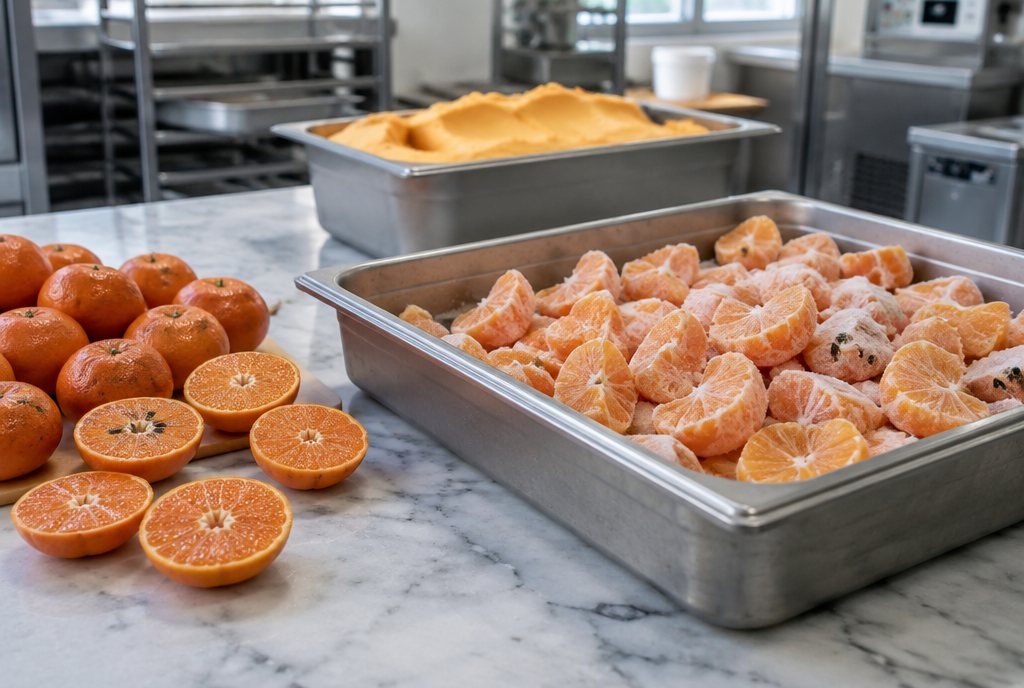
- Irregular quarters: the base for sorbet and mandarin ice cream, to be blended or sieved and added to the mix.
- 4×4 cubes: small, regular pieces for inclusions, ripples and tub decoration.
For ice cream makers the simplest choice is frozen: no desulphiting and no sulphites to manage. The SO₂ version makes sense if the cubes are to be candied first, for example for soft inclusions. Other cuts can be assessed on request.
A note on pieces: added as they are, frozen fruit cubes tend to turn hard and icy at display temperature. Many producers pass them through syrup first or use candied fruit, as we explain for frozen diced orange for ice cream.

Natural colour: sorbet or milk-based ice cream?
Mandarin’s orange colour comes from carotenoids in the flesh and peel. In water-based sorbet the fruit’s colour stays visible; in milk-based ice cream it lightens towards pastel. If colour is a selling point, sorbet shows it off better. Judge the colour on the finished product: fruit from different points in the season can vary in shade, to be agreed in the data sheet.
Seeds, bitterness and cold processing
- Seeds: many mandarin varieties have seeds which, blended with the flesh, bring bitter notes. Ask for the seed tolerance in the data sheet or plan a sieving step.
- Peel: a little zest in sorbet adds fragrance, too much adds bitterness. Check the composition of the semi-processed fruit and fine-tune the recipe with trials.
- Keep it cold: thaw in the fridge and use the released liquid too, as it holds juice and aroma. Many gelato makers add the fruit to a base that has already been pasteurised and cooled, so as not to heat it.
Pairings and planning
Mandarin pairs well with dark chocolate, almond, pistachio, cinnamon and honey. With frozen fruit the flavour can be offered outside the harvest season, which is in winter. For handling frozen fruit in the lab, see our guide to frozen fruit for gelato; for a sharper, more refreshing citrus sorbet, see lemon pulp for sorbets and granitas.
Frequently asked questions
Can I make mandarin sorbet with frozen quarters alone?
Yes, the quarters are designed to be blended and added to the base. Fruit, sugar and stabiliser levels are set by your recipe: run processing trials on the first batch.
Is mandarin in SO₂ suitable for ice cream?
It must be desulphited first and the residual sulphites checked: above 10 mg/kg or 10 mg/l, expressed as SO₂, they must be declared on the label as an allergen (Regulation (EU) No 1169/2011). That is why ice cream makers prefer frozen.
Do you supply ready-made mandarin pulp?
No: we supply mandarin as irregular quarters or cubes, to be processed in your lab. Our ready frozen pulps are orange, bitter orange and lemon.
Need this ingredient for your production?
Tell us product, cut, preservation method and volumes: we’ll reply with the technical data sheet and a tailored quote.