



In industrial ice cream, citrus flavours are permanent fixtures in the range: lemon and orange sorbets, cups, sticks and summer ice lollies. The challenge is to make them taste the same batch after batch, when the production peak falls exactly in the months when fresh citrus is scarce. Frozen citrus pulp for ice cream, stored at −18 °C, tackles the problem at the root: the fruit is processed in full season and used when needed.
Three pulps, three profiles
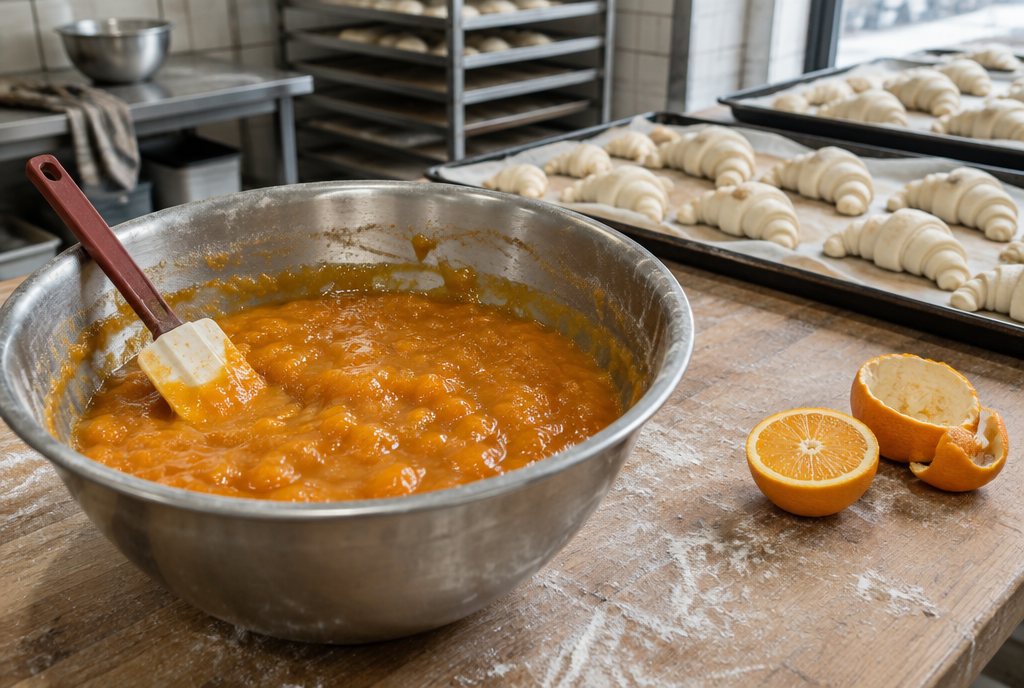
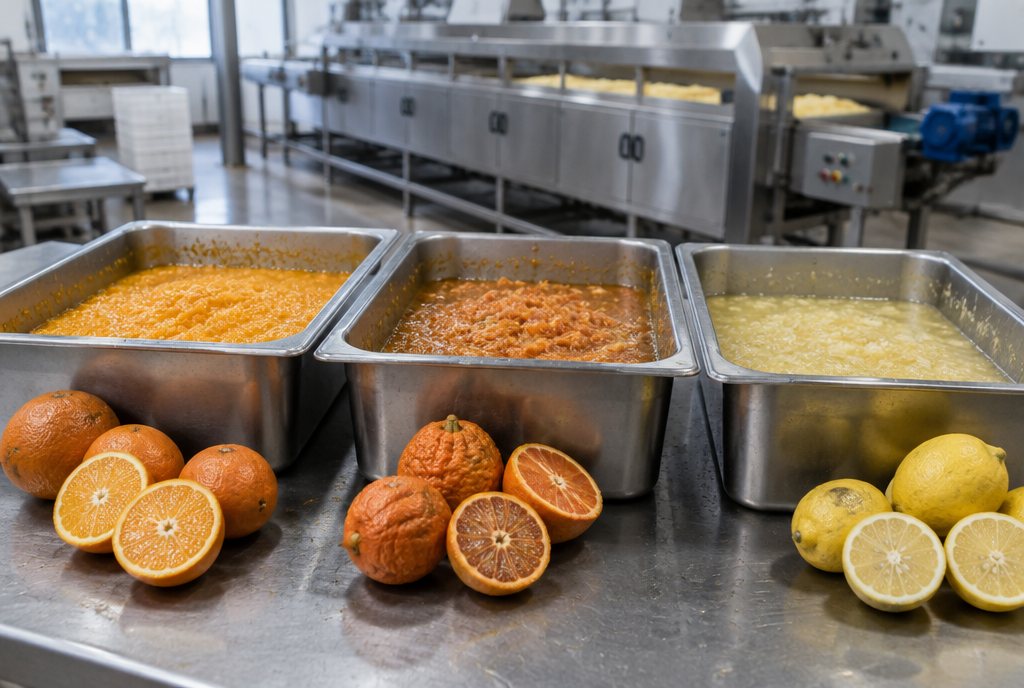
- Orange pulp: sweet and fruity, with a warm colour that gives character to sorbets and fruit ice creams. It is the base for orange flavours and for pairings with chocolate and creams.
- Bitter orange pulp: more aromatic, with a distinct bitter note. Suited to “grown-up” flavours and limited editions, on its own or blended with sweet orange.
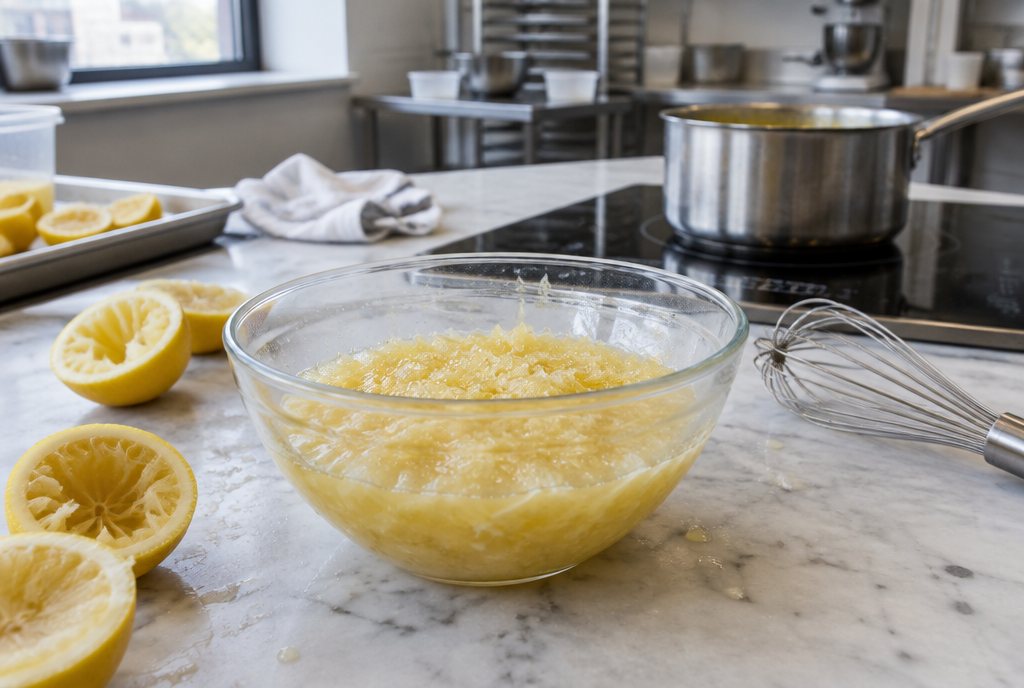
- Lemon pulp: very acidic and fresh, the classic base for lemon sorbets and ice lollies. For artisan gelato shops and bars, see our article on lemon pulp for sorbet and granita.
Sourcing all three pulps from the same supplier simplifies qualification, documentation and purchase planning.
Opposite seasons: why frozen makes sense
In Calabria, citrus is harvested mainly between autumn and spring; ice cream sells mainly in summer. Working with fresh fruit would mean buying citrus when it is scarcest or shifting production. With frozen pulp, the raw material is stocked during the harvest months and summer campaigns are planned with a ready ingredient, with no peel or waste to handle in the plant.
Citrus pulp for ice cream: sorbets, dairy ice cream, ice lollies
The same pulp behaves differently depending on the recipe:
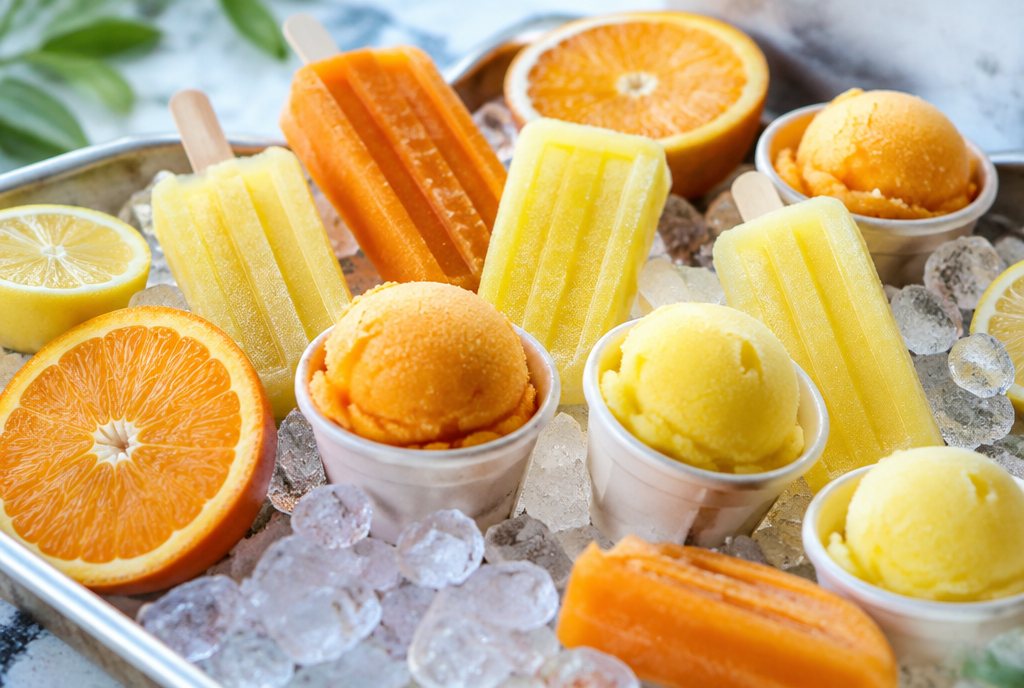
- Sorbets: without milk, the fruit takes centre stage. Compared with juice alone, pulp adds body and a fuller, less “watery” texture.
- Dairy ice cream: citrus acidity can destabilise milk proteins. Dosage, point of addition and mix temperature must be worked out to avoid curdling and separation.
- Ice lollies: in simple water-and-sugar recipes, pulp brings natural colour and a recognisable fruit flavour.
Mix balancing and in-line dosing
The sugars and acidity of the pulp are part of the mix balance: they affect sweetness and freezing point, and therefore the hardness and creaminess of the finished product. That is why the recipe is set on the values stated in the data sheet for each batch, such as Brix, acidity and fibrous parts, rather than on estimated averages. For orange pulp parameters, see our article on frozen orange pulp for industry.
One point to settle with your food technologist is the point of addition: in the mix before pasteurisation, or afterwards, during ageing or at the inlet of the continuous freezer. Adding it later better preserves the fresh citrus aroma, which heat tends to dull; the choice must, however, be validated in your HACCP plan on the basis of the microbiological characteristics stated in the data sheet.
Thawing and handling
- Thaw under refrigeration, in the closed pack, following a fixed procedure.
- Homogenise before dosing: the liquid can separate from the fibre.
- Do not refreeze thawed pulp, and keep to the use times stated in the data sheet.
Frequently asked questions
Can the pulps be blended?
Yes: orange with bitter orange, or orange with lemon, are common blends for creating signature flavours. Proportions are fine-tuned with trials on your own line.
Does pulp replace flavourings and concentrates?
It depends on the product. Pulp brings fruit, body and natural colour; flavourings and concentrates remain the producer’s choice, and many recipes use both.
What should a request for quotation include?
Which pulps you need, product type (sorbet, dairy ice cream, ice lolly), desired texture, pack size suited to the line, annual volumes and campaign calendar.
Need this ingredient for your production?
Tell us product, cut, preservation method and volumes: we’ll reply with the technical data sheet and a tailored quote.