



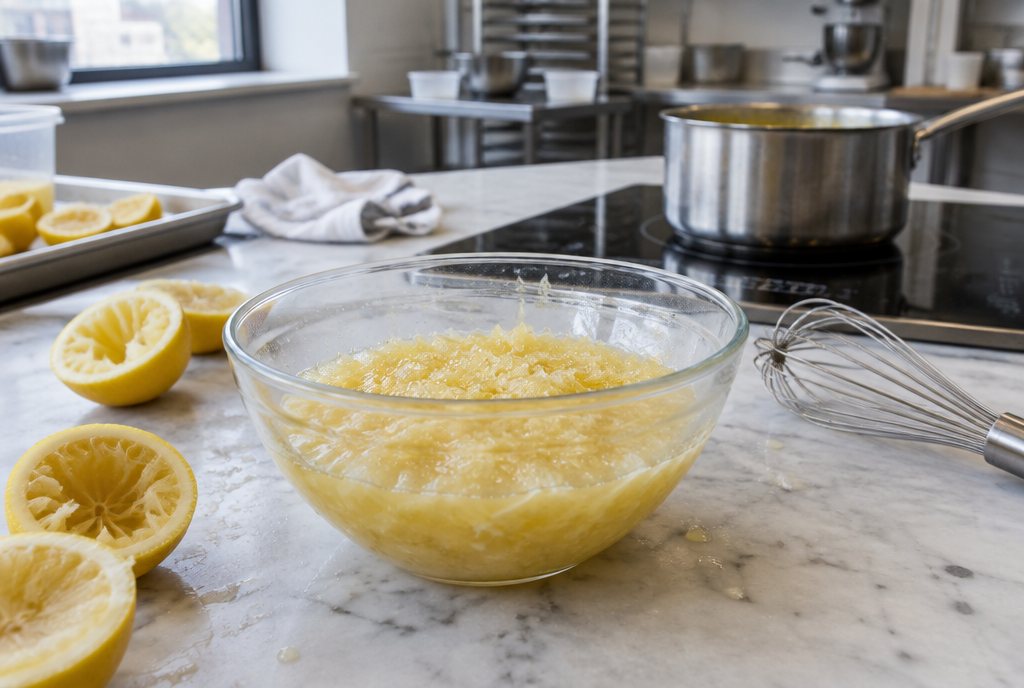
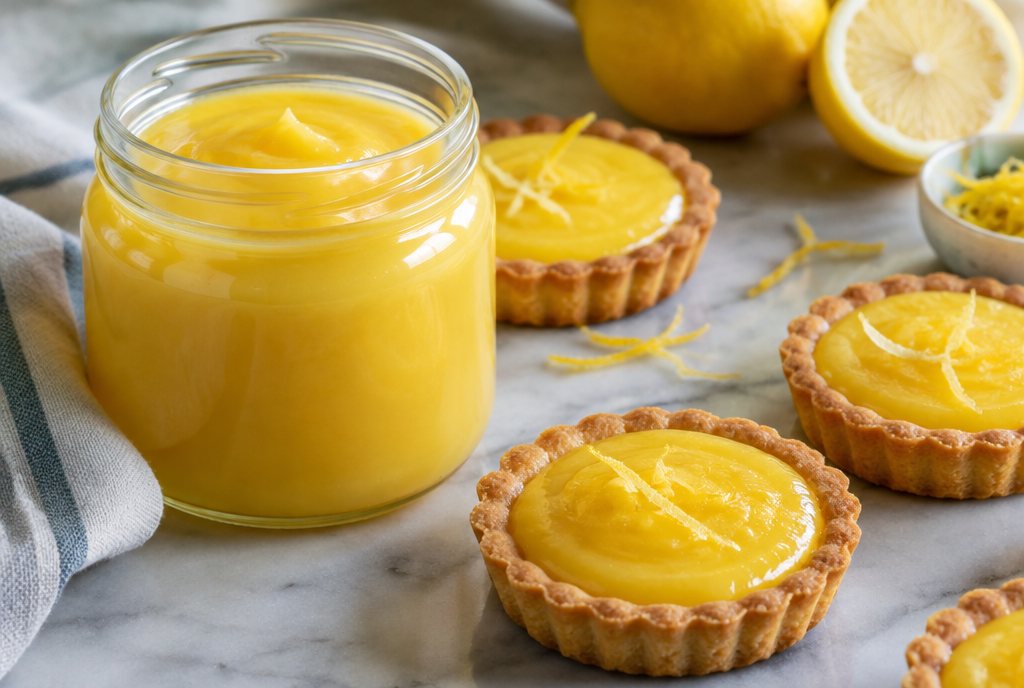
Lemon curd is a thick, glossy cream made from lemon, sugar, eggs and butter. Born in the British tradition, it is now at home in pastry kitchens across Europe: in tartlets, choux buns, macarons, layer cakes and retail jars. For a pastry lab or a confectionery plant, frozen lemon pulp for lemon curd, stored at −18 °C, is a way to work from a consistent base all year round without squeezing lemons every day.
Why pulp instead of freshly squeezed juice
Filtered juice brings acidity and aroma. Pulp also contains the fruit’s juice vesicles and some natural fibre: in a cream that means more body and a flavour closer to the whole lemon. Daily squeezing also has hidden costs: labour, waste, equipment hygiene and fresh fruit whose acidity and juice yield change from one harvest to the next. With frozen lemon pulp, every batch comes with its technical data sheet and the recipe starts from known values.
Lemon pulp for lemon curd: what happens during cooking
In lemon curd the structure comes from the eggs: as they heat, the proteins set and thicken the cream. The line between a velvety curd and scrambled eggs is a fine one, so it is cooked gently, stirred constantly and never boiled. Many recipes add the butter at the end, off the heat, for shine and creaminess. Two practical points:
- Stainless steel equipment: such an acidic mix can react with aluminium or unlined copper, giving metallic notes and colour changes.
- Pasteurised egg products: common in industrial production for food safety; the heat treatment of the curd is validated within your own HACCP plan.
Starch-thickened lemon creams: watch the acidity
In lemon creams thickened with starch, such as tart fillings, bake-stable creams or croissant fillings, acidity also affects texture: in hot, acidic conditions starch can lose thickening power and the cream ends up runnier than expected. Many pastry labs cook the base first and add the pulp at the end; industrial producers choose starches and thickeners that hold up in acidic conditions and in the oven. Milk does not like acidity either: when hot, with a lot of lemon, it can curdle, so the pulp is usually stirred in once the cream has cooled a little. Sugar and pulp dosage is set on the Brix and acidity values of each batch, as explained in our guide to Brix and acidity in Calabrian citrus.
The fragrance of the zest
Much of a lemon’s aroma lies in the essential oils of the peel, the flavedo, which is why many lemon curd recipes add grated or infused zest. The pulp brings acidity, body and fruit flavour; the zest note can be added with peel cuts such as lemon peel julienne, strained out or left in the cream depending on the effect you want.
Thawing and texture
- Thaw in the refrigerator, in the closed pack, and mix well: the liquid can separate from the fibre.
- For a perfectly smooth curd, blend or sieve; for a more rustic cream, leave the vesicles visible.
- Pulp fineness and tolerances for seeds and fibrous parts are agreed in the data sheet.
The same pulp also works in ice cream: see our article on lemon pulp for sorbet and granita.
Frequently asked questions
Can I use the pulp while still frozen?
For creams and curds it is best thawed and mixed so it can be dosed precisely. In industrial plants the method is set according to the line.
Is the pulp enough for lemon fragrance?
It brings acidity, body and fruit flavour. For the aromatic note of the zest, many recipes add lemon peel; composition and fineness of the pulp are stated in the data sheet.
What should I include in a request for quotation?
End use (lemon curd, bake-stable cream, filling), desired texture, pack size based on your usage, annual volumes and any seasonal peaks.
Need this ingredient for your production?
Tell us product, cut, preservation method and volumes: we’ll reply with the technical data sheet and a tailored quote.