



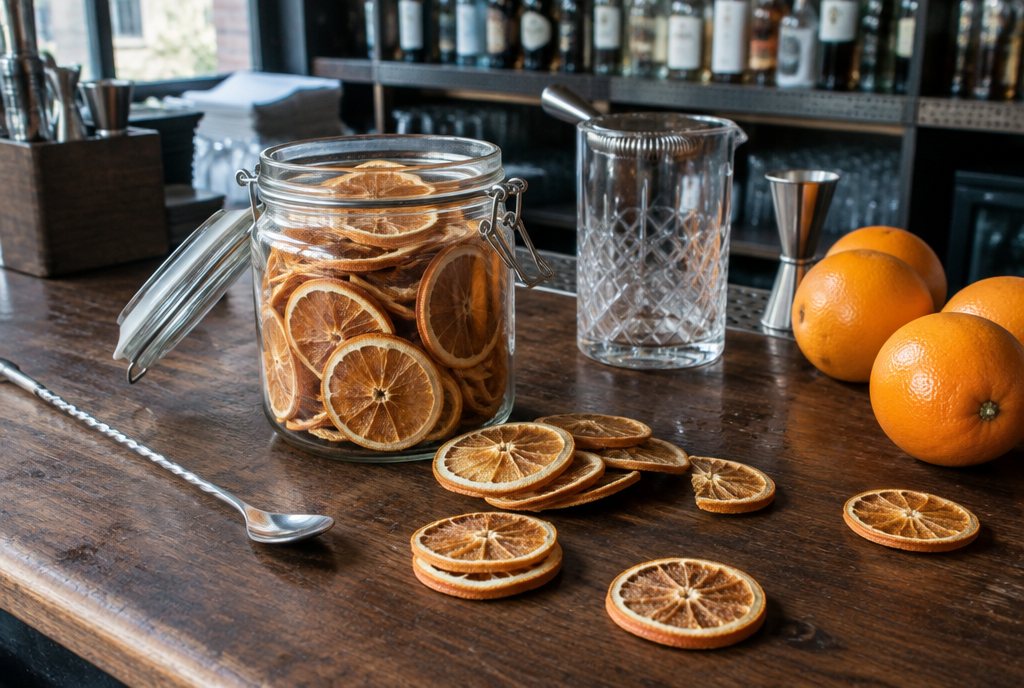
An amber orange wheel, thin and almost translucent, resting on the ice of a drink: it is one of the most recognisable garnishes in modern mixology. Bartenders like dried orange slices for cocktails for the look, but above all for practical reasons: they keep behind the bar without spoiling, are ready to use and give the same result in the first and the last drink of the night.
Why dried orange instead of fresh slices
- No daily prep: fresh fruit has to be cut every day and leftover slices are binned at the end of service. Dried wheels are taken out only when needed.
- Less waste: a closed, well-stored pack avoids slices that oxidise or dry out on the board.
- Consistent look: regular shape and colour help keep the same presentation standard, even across different venues of the same group.
- Light and compact: easy to carry and store for events, catering and small bars.
Dried orange slices for cocktails: where they work best
Orange is the citrus that pairs with dark spirits, vermouths and bitters. A dried wheel is a natural garnish for the Negroni and the Americano, the Old Fashioned and its twists, Spritz-style drinks and many spiced gin and tonics. In hot drinks such as mulled wine, punch and hot toddies, the slice rehydrates and releases aroma: from decoration it becomes an ingredient. For fresher, sharper drinks many bars alternate orange with other citrus, such as dried lime wheels.

Beyond the garnish: syrups, infusions and rims
- House syrups and cordials: the wheels can be steeped to make orange syrups, strained before use.
- Spirit infusions: for batches and signature recipes. If you only need the aroma of the peel, read our article on orange peel for liqueurs.
- Rim powders: finely ground, they can be mixed with sugar or salt to rim the glass.
- Toasted note: some bartenders pass the slice over a flame for a caramelised note; do it carefully, as a dry wheel burns quickly.
Storage behind the bar
Dried fruit’s main enemy is moisture: when it absorbs water it turns soft and sticky and loses its dry, bright look. At the bar the risks are steam from the glasswasher, the ice machine and wet hands. A few simple rules:
- keep the wheels in an airtight container, away from light and heat;
- pick them up with dry tongs, never by hand;
- close the pack straight away and keep out only what you need for the shift.
Storage instructions after opening are given in the technical data sheet.
What to ask your supplier
For a bar or a hospitality distributor, what matters is even thickness and diameter, uniform colour, tolerance for broken or incomplete slices, ingredients and allergens, and pack size (for a single bar or for distribution). Our dried orange slices are part of a range that also includes lemon, mandarin and lime: for an overview, read our guide to dried citrus slices.
Frequently asked questions
Dried or candied?
Dried wheels are dry and light, ideal on ice or on foam. Candied slices, made from orange slices in SO₂, are soft and glossy and better suited to sweet drinks and desserts in a glass.
Do the wheels stay afloat?
At first they tend to float; over time they rehydrate and soften. In long drinks many bars fix them to the rim of the glass with a small notch or a garnish clip.
Are they edible?
They are dried fruit, so yes. In the glass, though, their role is mainly aromatic and decorative, and the peel can taste slightly bitter.
Need this ingredient for your production?
Tell us product, cut, preservation method and volumes: we’ll reply with the technical data sheet and a tailored quote.