



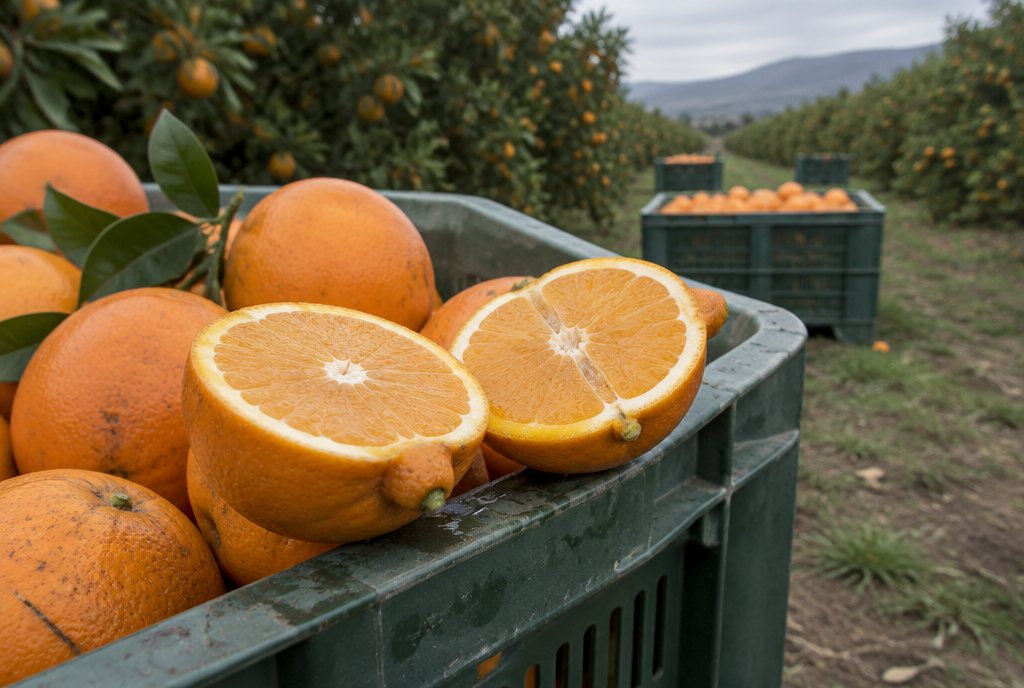
When an industrial buyer looks for oranges to process, the question is not only “how much do they cost” but “how do they behave on the line”. Navel oranges are among the varieties industry values most because they combine a generous peel, regular segments and no seeds. Grown in Calabria, they add one more advantage: a short supply chain between grove and plant.
What makes Navel suitable for processing
- Seedless: Navels are typically seedless. For segments, cubes and slices this means less waste and no downstream seed checks.
- Thick, aromatic peel: rich in essential oils with a substantial albedo — the ideal base for peel, strips, julienne and candied fruit.
- Regular, easily separated segments: essential for peeled segments for yogurt, desserts and food service.
- Generous size: large fruit yields more in cutting and peeling.
A note on juice
A good supplier should state this clearly: Navel juice, when stored or heat-treated, tends to develop delayed bitterness caused by limonin. That is why Navels perform best as segments, peel, slices and candied fruit, while for long-life juices variety and process should be assessed together. For fresh juices and smoothies consumed immediately, their sweetness is an asset.
Why Calabria
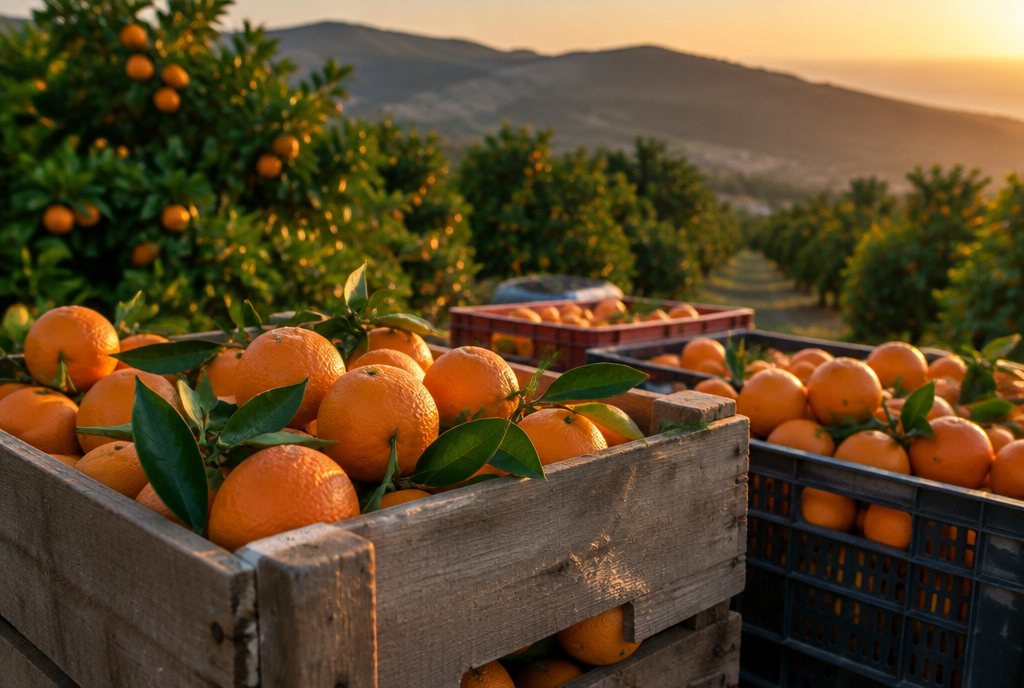
Calabria is one of Europe’s most important citrus districts, as we explain in our article on the Calabrian citrus district. Mild climate, long sunshine hours and fertile soils produce well-coloured fruit with healthy peel and a sugar-acid balance appreciated by industry. Early and late Navel varieties make it possible to process from late autumn into spring — see our Calabrian citrus calendar.
For a company like ours, based in San Ferdinando a few kilometres from the groves, proximity means short times between harvest and processing: the fruit reaches the plant fresh and is processed at its best.
Semi-processed products made from Navels
- Segments, frozen or in SO₂;
- Cubes of orange and peel, for candied fruit and bakery;
- Peel strips and julienne;
- Slices for decoration;
- Quarters for juices and extracts.
All available frozen at −18 °C or preserved in SO₂, depending on use. To choose the right parameters, see our guide on Brix and acidity of Calabrian citrus.
Frequently asked questions
Are Navels always seedless?
They are typically seedless varieties; occasional seeds are handled during sorting and the tolerance is stated in the data sheet.
When are they available?
Harvest runs from late autumn into spring depending on variety; thanks to freezing and SO₂ preservation, semi-processed products are available all year.
Do you process non-Navel oranges?
We also process other Calabrian citrus, including bitter orange for pulps and marmalades. Contact us for availability.
Need this ingredient for your production?
Tell us product, cut, preservation method and volumes: we’ll reply with the technical data sheet and a tailored quote.