



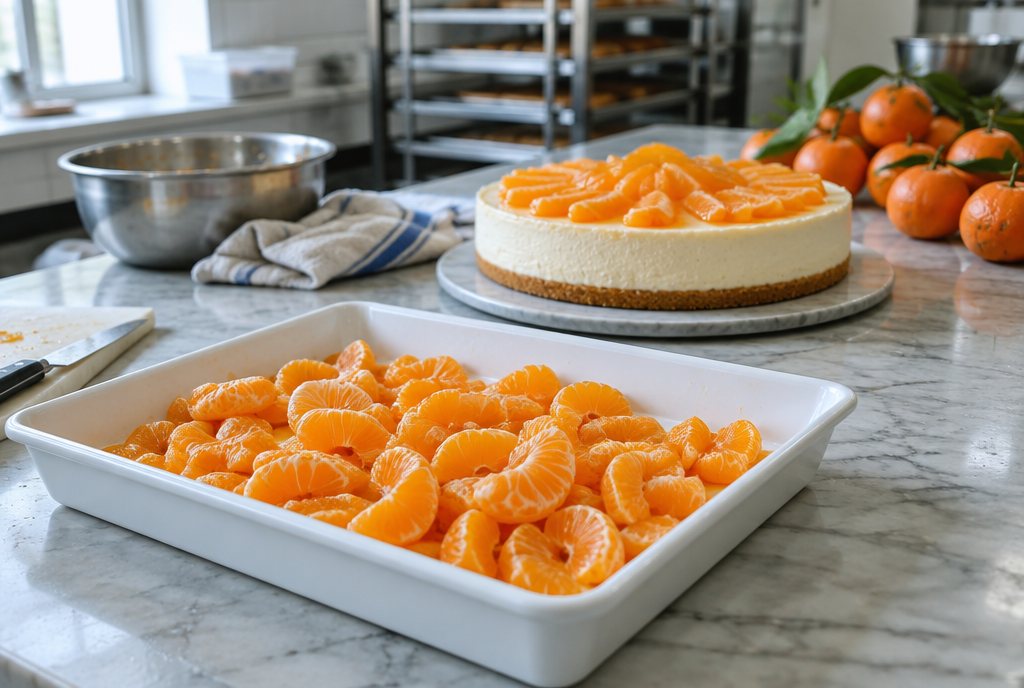
A glossy mandarin segment on a cheesecake or on top of a spoon dessert conveys season, aroma and colour at a glance. Yet mandarin segments are among the most delicate fruit pieces to handle in production: thin membrane, very juicy flesh, often seeds. Before bringing them onto a cake or dessert line, it pays to understand how they behave and when a whole segment is really needed.
Why a mandarin is not a small orange
Mandarins peel easily and their segments come apart with little effort, but that is exactly why they are fragile: the membrane around them is thin and the flesh releases juice as soon as it is handled. Compared with frozen orange segments for yogurt and desserts, three things change:
- Size: the segment is small, suited to single portions and fine decorations.
- Seeds: traditional mandarins often have them; on a visible dessert they must be excluded or kept to a minimum, as agreed in the data sheet.
- Aroma: sweeter and more floral than orange, it pairs well with chocolate, pistachio, ricotta and vanilla.
Mandarin segments with or without membrane
A segment with its membrane holds its shape better and stands up to thawing and handling. A fully peeled segment, without membrane, looks more refined and is softer in the mouth, but it is also far more fragile. The membrane-free canned segments common on the international market generally come from seedless varieties and are obtained with specific peeling treatments: a different product from a semi-processed ingredient for pastry.
On cakes and dessert cups: thawing, draining, glazing
- Chilled cakes: thaw the segments in a chiller, drain them well and place them just before glazing, so that the juice does not soak creams and mousses.
- Cakes sold frozen: the segments are placed on the cake during production and go with it into the blast freezer and cold store, with no separate thawing step.
- Coating: a neutral glaze or mirror glaze protects the segment from drying out and gives it shine.
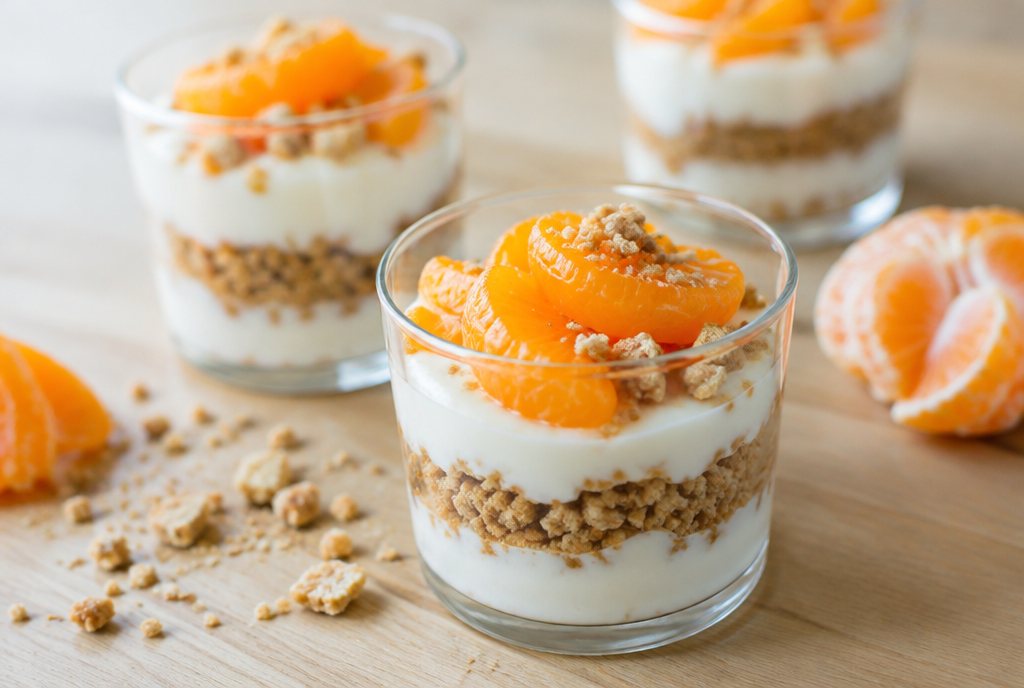
- Cups and verrines: segments layered with yogurt, panna cotta or mousse; the juice released can be reused in sauces and jellies.
To portion pieces without lumps, the freezing method also matters: see our guide to loose and block freezing.
When quarters or dice are enough
A whole segment is not always needed. In fillings, inner cake layers and doughs the piece is not visible, and a sturdier format makes production easier. Our standard Calabrian mandarin range comes as 4×4 dice and irregular quarters, frozen at −18 °C or in SO₂. Whole segments and other cuts can be assessed on request, depending on volumes and harvest period.
Mandarin in SO₂
SO₂ product is designed for candying and cooked preparations: it must be desulphited before use, and in the finished product sulphites above 10 mg/kg expressed as SO₂ must be declared on the label as an allergen (Regulation (EU) No 1169/2011). For whole candied fruit, the starting point is whole clementines.
Frequently asked questions
Do frozen mandarin segments stay firm after thawing?
They become softer than fresh fruit, like all juicy fruit. That is why they are used where softness is not an issue, or placed on the cake before blast freezing.
Mandarin or clementine for decoration?
Mandarin has a more intense aroma, clementine usually fewer seeds. Our clementines are supplied whole in SO₂, for candying and syrups.
What should I state in my request for quotation?
End use, format (segment, quarter or dice), with or without membrane, tolerance on seeds and broken pieces, preservation, packaging and seasonal volumes.
Need this ingredient for your production?
Tell us product, cut, preservation method and volumes: we’ll reply with the technical data sheet and a tailored quote.