



For many consumers, the definitive orange marmalade is the English kind: bittersweet, fragrant, with strips of peel suspended in the set. Behind it lies a specific fruit, the bitter orange (Citrus aurantium), known in Britain as the Seville orange. For a preserves manufacturer, understanding bitter orange for marmalade means understanding why a fruit that is almost inedible raw gives results in the pan that sweet oranges cannot match.
A different fruit from the sweet orange
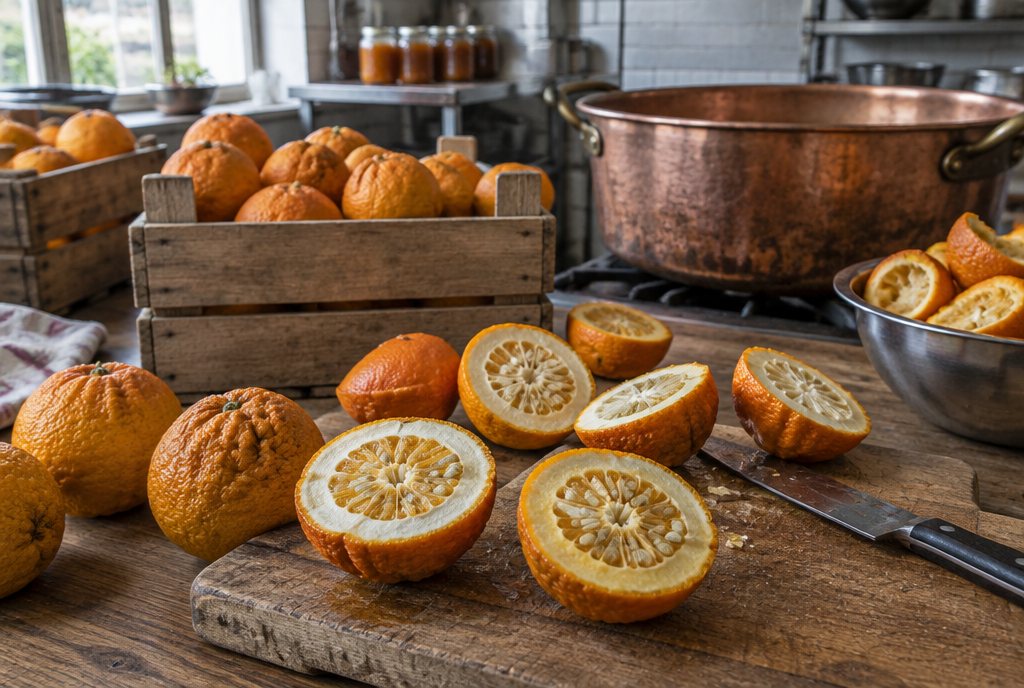
Bitter orange is easy to recognise by touch: thick, rough and very aromatic peel, plenty of albedo, sharp and bitter pulp, lots of seeds. The very traits that rule it out for the fresh market make it ideal for processing:
- Peel: the flavedo is rich in intense, slightly bitter essential oils that survive cooking and remain recognisable in the jar.
- Albedo and seeds: both are rich in pectin. In the traditional recipe, the seeds are tied in a muslin bag and boiled with the fruit precisely to release it.
- Pulp: its high acidity helps pectin set and balances the large amount of sugar; the bitterness adds character and length.
Bitter orange for marmalade: the English styles
English marmalade is not a single product. The differences come mostly from how the peel is cut and how the batch is cooked:
- Fine shred: thin strips, a clearer set, an elegant flavour.
- Thick cut: chunky, chewy pieces of peel and a bolder bitterness.
- Dark marmalades: longer cooking or dark sugars give an amber colour and caramel notes.
- Versions without pieces: the peel is finely processed or strained out, and the flavour comes mainly from pulp and juice.
A short season and frozen pulp
Bitter oranges ripen in winter and have a short harvest window: in Britain, January and February are traditionally the months of home-made marmalade. For a manufacturer producing all year, concentrating purchasing and processing into a few weeks is a heavy constraint. Frozen bitter orange pulp at −18 °C overcomes it: the fruit is processed in season and the pulp is used when needed, with more consistent characteristics from batch to batch. For availability periods, see our Calabrian citrus calendar.
Pulp and peel: building the recipe
The pulp brings acidity, bitterness, body and part of the pectin; visible peel is the signature of the English style. Production therefore often works with two components:
- a pulp base of bitter orange, for structure and flavour;
- peel strips for appearance. They must be softened in water before the sugar goes in, because once sugar is added the peel softens far more slowly. For less bitter lines, some producers use sweet orange strips, such as orange peel julienne, knowing that the character of the product changes.
For the sweet vs bitter comparison, the regulations and yield parameters, see our guide to oranges for industrial marmalade.
What to ask for in the data sheet
- pulp composition: seeds, peel fragments and fibrous parts;
- Brix and acidity, with accepted tolerances;
- consistency of bitterness and colour between batches;
- packaging, storage at −18 °C and recommended thawing method;
- annual volumes and collection schedule.
Frequently asked questions
What is bitter orange marmalade called on the label?
In the EU the name “marmalade” is reserved for citrus products and is combined with the name of the fruit used. Minimum citrus content and exact wording are set by Directive 2001/113/EC as amended: always check the consolidated text and national rules.
Can English-style marmalade be made with sweet oranges only?
You will get a good orange marmalade, but not the same profile: sweet oranges have less bitterness and acidity. Many producers blend the two to fine-tune the character.
Do you also supply cut bitter orange peel?
Our standard product is bitter orange pulp frozen at −18 °C. Other formats, such as peel strips, can be assessed on request depending on volumes and cut.
Need this ingredient for your production?
Tell us product, cut, preservation method and volumes: we’ll reply with the technical data sheet and a tailored quote.