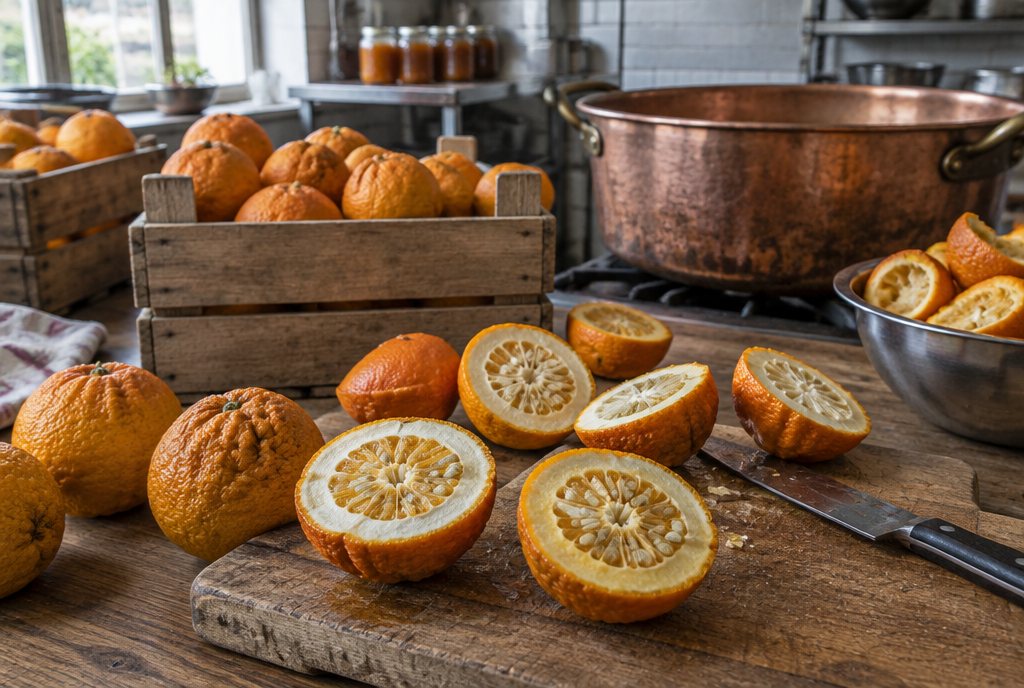




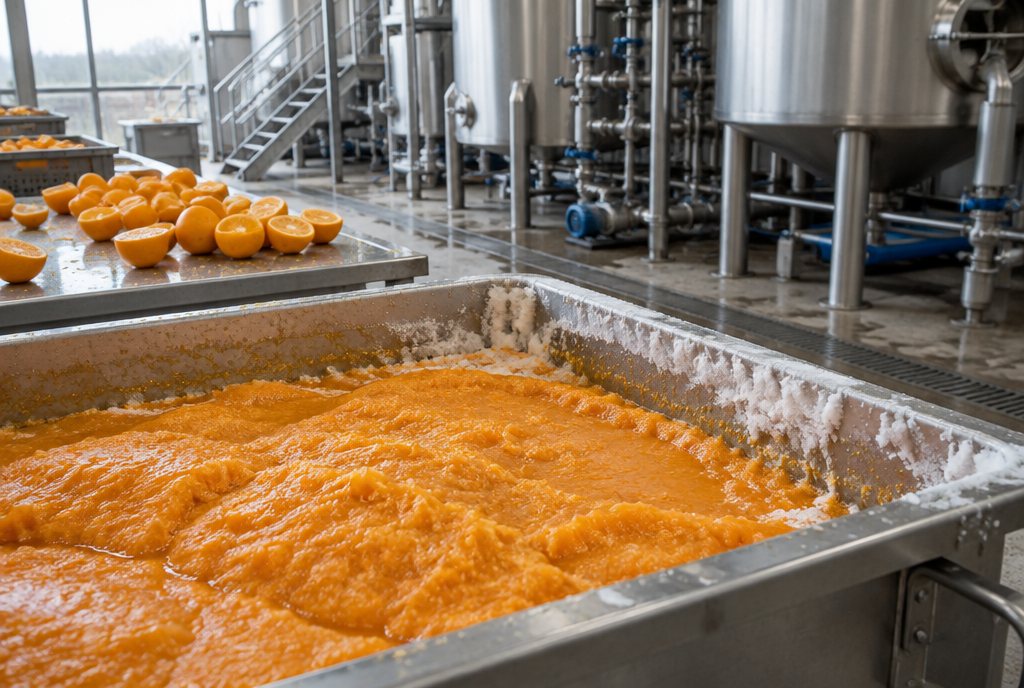
In an orange beverage, pulp makes the difference between a thin liquid and a drink that tastes of fruit: it adds body, natural cloud and fullness in the mouth. For juice, nectar and fruit drink manufacturers, frozen orange pulp for juice at −18 °C should be treated as a raw material in its own right, to be specified and planned, not as a recipe detail.
Juice, nectar, drink: where pulp fits
In the EU, juice product names are set by Directive 2001/112/EC as amended, transposed in each Member State:
- Fruit juice: obtained from the fruit, with no added sugars. The rules allow pulp and cells obtained from the same fruit species to be restored: this is the basis of juices “with pulp”.
- Nectar: fruit juice and/or purée with added water, with or without sugars or honey, and with a minimum fruit content set fruit by fruit.
- Juice drinks: fall outside the directive’s reserved names and allow more freedom in formulation; the declared fruit percentage remains a selling point on the label.
How the pulp should be declared, and whether it counts towards the minimum fruit content, depends on how it is obtained: check with your supplier and quality department before fixing the recipe.
What frozen orange pulp for juice and nectars adds
- Body: fibres increase perceived thickness, especially useful in nectars, where added water tends to thin the product.
- Cloud: fine particles contribute to the opaque look consumers associate with orange.
- Visible pieces: if the recipe calls for them, quantity and size of particles should be agreed in the data sheet.
- Taste: pulp rounds out the profile and makes the drink less “watery”.
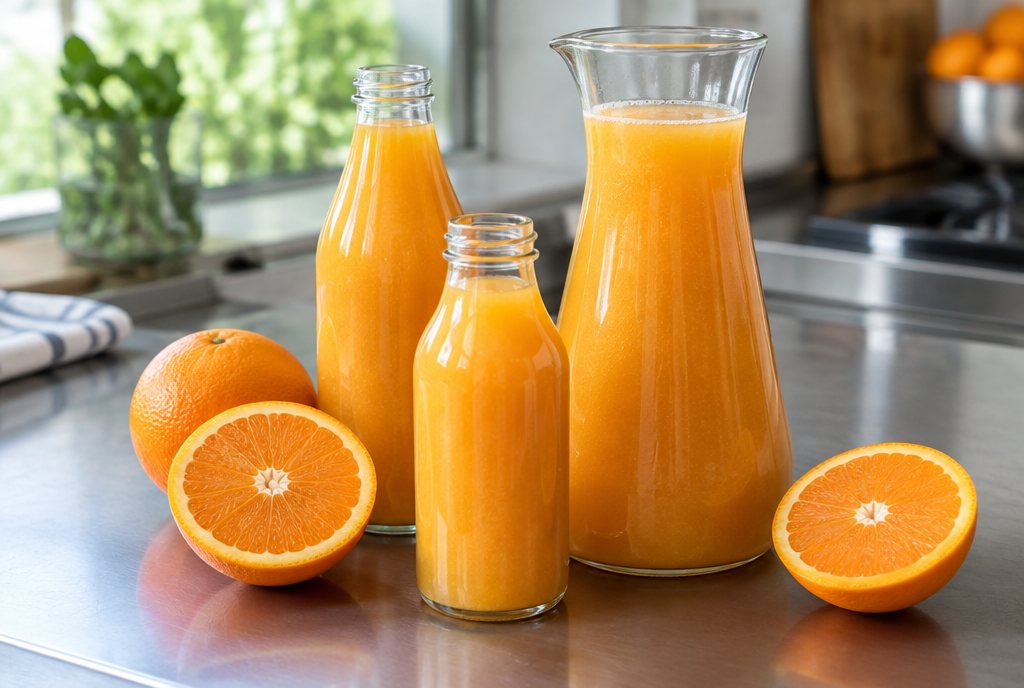
From cold store to line
- Planned thawing: frozen pulp, especially in large packs, takes time to thaw; plan it under refrigeration or with dedicated systems and use the product promptly.
- Dispersion: incorporate the pulp evenly into the base with suitable mixing before final adjustments.
- Heat treatment: pasteurisation and homogenisation change viscosity and particle appearance: validate the recipe on the final plant.
- Stability: in long-life drinks, sedimentation or phase separation may occur; pulp dose and process should be fine-tuned together.
Frozen orange pulp lets you produce all year with an already cleaned raw material, freeing the line from the harvest calendar.
What to specify in your request for quotation
- finished product (juice with pulp, nectar, fruit drink) and planned heat treatment;
- source variety: in long-life drinks some oranges develop delayed bitterness, as we explain for frozen orange quarters for juice;
- Brix and acidity with tolerances (on Calabrian citrus, see Brix and acidity);
- quantity and size of particles, absence of seeds and peel fragments;
- packaging suited to your thawing set-up, annual volumes and collection schedule.
To read the parameters in a pulp data sheet, see our guide to frozen orange pulp for industry.
Frequently asked questions
Does pulp replace juice?
No, they play different roles: juice brings the flavour base and sugars, pulp brings body, cloud and texture. Many recipes use both.
How much pulp should be added?
It depends on product, market and process. The dose is set through formulation trials on your line, starting from the batch parameters in the data sheet.
What packaging is available?
Formats and weights are agreed according to your thawing equipment and volumes: let us know in your request.
Need this ingredient for your production?
Tell us product, cut, preservation method and volumes: we’ll reply with the technical data sheet and a tailored quote.